Which Horoscope App Is Actually the Most Accurate and Private?
The search for a reliable astrology app often feels like navigating a maze of generic daily horoscopes, aggressive subscription prompts, and questionable data privacy policies. With a massive 65% increase in searches for terms like "astrology houses" and "birth chart" in recent years, users are moving past surface-level sun signs and demanding deeper, mathematically sound insights.
If you are looking for the ideal astrology application based on specific needs, our analysis points to a few standout options. Time Passages ranks among the top for technical accuracy and serious students, utilizing professional-grade ephemeris data. CHANI is highly recommended for human-authored, mindful readings. For users prioritizing data security, Daily Horoscope stands out as a top choice due to its minimal permission requirements.
However, finding the right platform requires looking under the hood. Does the app use professional-grade calculation engines, or is it estimating planetary positions? Is the daily reading written by a seasoned astrologer, or generated by an artificial intelligence algorithm? In this comprehensive breakdown, we analyze the leading platforms based on technical accuracy, privacy standards, and the quality of their content.
How We Ranked Top Horoscope Apps for Accuracy and Value
To evaluate these platforms, we moved beyond the aesthetic "vibe" and focused on the underlying mechanics. According to industry analysis by Holisticism, generating an accurate birth chart requires exact data: your date, year, precise time, and city of birth. Apps that fail to ask for this level of detail are fundamentally incapable of providing accurate transit readings.
We assessed the market using three primary criteria:
- Mathematical Engine: Does the app use a recognized planetary database (like NASA data or the Swiss Ephemeris) to calculate exact degrees?
- Content Authorship: Are the interpretations written by practicing astrologers, or are they generated by machine learning models?
- Data Privacy: Does the app require unnecessary access to your contacts, location history, or phone state?
| App Name | Ideal For | Authorship | Privacy Score | Data Source |
|---|---|---|---|---|
| Time Passages | Serious Students | Human Verified | 8/10 | Swiss Ephemeris |
| CHANI | Mindful Healing | Human Verified | 9/10 | Custom / Professional |
| The Pattern | Jargon-Free Insights | Mixed | 7/10 | Proprietary Algorithm |
| Co-Star | Social Sharing | AI/ML AI-Driven | 5/10 | NASA Data + AI |
| Daily Horoscope | High Privacy | Human | 10/10 | Standard Ephemeris |
Why Technical Accuracy and the Swiss Ephemeris Matter for Your Chart
In the realm of professional astrology, not all calculation engines are created equal. The gold standard for planetary calculation is the Swiss Ephemeris, a highly precise mathematical framework produced by Astrodienst (the team behind Astro.com).
Discussions among practitioners on professional Reddit forums frequently highlight that many mainstream apps suffer from calculation inaccuracies, particularly regarding Ascendants and House cusps. Professional astrologers often reject charts generated by certain popular websites because their underlying math rounds off crucial minutes and seconds of planetary degrees.
For actual practitioners, software like Astro Gold and AstroConnexions Pro Standard are the preferred tools because they rely strictly on the Swiss Ephemeris. When choosing a consumer app, checking whether it licenses this specific ephemeris is a strong indicator of its technical reliability.
The Birth Time Trap If an app tells you that an exact birth time "isn't necessary," proceed with caution. Without an exact time, your Rising Sign (Ascendant) and the placement of your astrological Houses cannot be calculated accurately. The Ascendant changes roughly every two hours, meaning a guess can throw off your entire chart reading by several degrees, rendering transit predictions highly inaccurate.
Which Astrology Apps Respect Your Privacy and Which Harvest Your Data?
Astrology apps require highly personal data by design. To calculate a chart, you must hand over your exact birth date, time, and location. However, the privacy audit reveals a stark contrast in how different companies handle this information.
Many venture-capital-backed applications have faced scrutiny for aggressive data harvesting. Some platforms request continuous GPS tracking, access to your contact lists (ostensibly for "friend compatibility" features), and device state permissions. In contrast, the Daily Horoscope app explicitly warns users against platforms that demand "ridiculous permissions." Daily Horoscope functions entirely without invasive location tracking or address book access, proving that an app does not need to harvest your digital life to provide a daily reading.
Red Flag Permissions to Watch For:
- Continuous Background Location: Your birth city is static; an app does not need to track your current movements to calculate your natal chart.
- Contact List Access: Unless you are actively choosing to sync with friends, an app should not mandate access to your phonebook.
- Third-Party Data Sharing: Check the privacy policy to ensure your psychological profile and birth data aren't being sold to targeted advertisers.
Is Your Horoscope Written by a Human or an AI Algorithm?
The debate between human intuition and artificial intelligence has deeply impacted the astrology market. Users are increasingly wary of "AI slop"—generic, algorithmically generated text that lacks nuance.
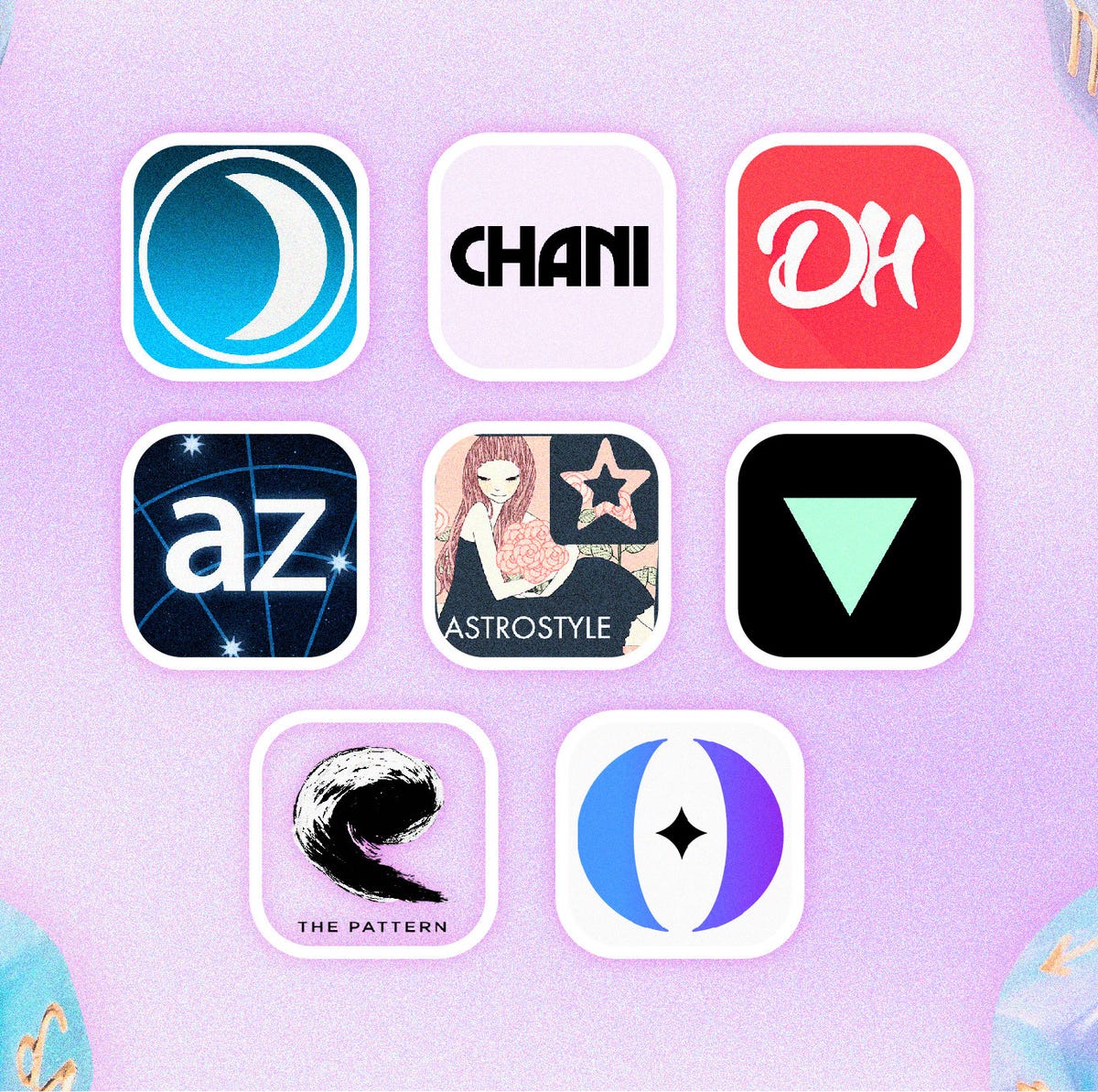
Image source: Seventeen Magazine
According to industry reviews from publications like Yoga Journal, platforms like Co-Star openly utilize AI and machine learning to "hobble together" paragraphs based on NASA data. This results in a tone that users often describe as detached, aloof, or overly snarky. While entertaining for social media sharing, it lacks the psychological depth of traditional practice.
Conversely, apps like CHANI (authored by Chani Nicholas) and AstrologyZone (authored by Susan Miller) are celebrated because they are written by specific, high-authority human astrologers. A human astrologer synthesizes conflicting planetary transits—for example, balancing a challenging Saturn square with a supportive Jupiter trine—in a way that AI currently struggles to contextualize, resulting in a more cohesive and empathetic reading.
Top Horoscope Apps for Every Type of Astro-Enthusiast
Because search intent varies wildly—from users wanting a quick daily vibe check to students needing exact transit degrees—there is no single application that fits everyone. Based on our assessment of features, accuracy, and user feedback, here are the standout options categorized by user needs.
Time Passages Is a Top Choice for Serious Students and Accuracy
For those looking to bridge the gap between casual interest and professional study, Time Passages is widely regarded as one of the most robust tools available. Recommended heavily by professional astrologers on platforms like TikTok, it is frequently cited as the "only app you'll ever need" for deep chart analysis.
It utilizes the Swiss Ephemeris for pinpoint accuracy and offers incredibly comprehensive transit descriptions. Additionally, it features a detailed compatibility meter that breaks down synastry for both romantic and business relationships, explaining the exact planetary aspects at play rather than just offering a generic score.
CHANI Offers an Excellent Experience for Mindful and Healing Horoscopes
Created by renowned astrologer Chani Nicholas, the CHANI app stands out for its focus on self-care, reflection, and social justice. The content is entirely human-authored, providing a stark contrast to the detached tone of AI-driven competitors.
For a premium subscription of roughly $11.99 per month, users gain access to highly personalized audio affirmations, a "meditation of the day" tailored to current transits, and detailed journal prompts. It is a top-tier option for users who view astrology as a tool for psychological healing and personal growth rather than just predictive fortune-telling.
The Pattern Is Ideal for People Who Hate Astrology Jargon
If terms like "Mercury retrograde in the 12th house" or "Pluto square Venus" make your eyes glaze over, The Pattern is a strong contender. This app translates complex astrological transits into plain, psychological English.
It focuses heavily on personality traits, behavioral cycles, and relationship dynamics without ever using traditional astrology jargon. A unique feature of The Pattern is its ability to run compatibility analyses on friends or partners who are not even on the app, provided you have their birth data.
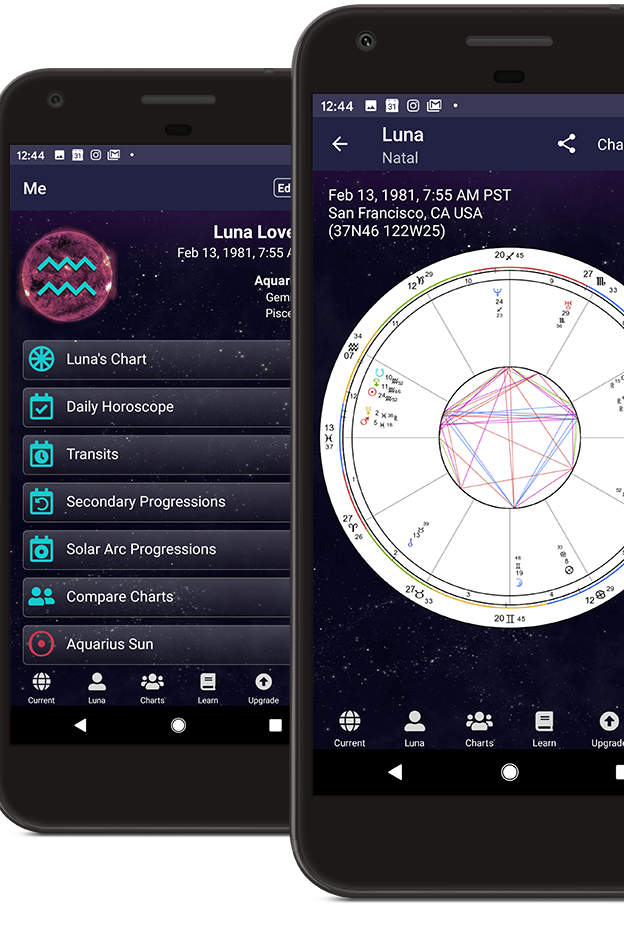
Image source: Oprah Daily
Co-Star Remains a Popular Social Astrology App for Gen Z
With over 20 million downloads and a user base that includes an estimated 25% of all 18-25 year old women in the US (according to recent industry data), Co-Star is a cultural phenomenon. Backed by $5M in venture capital, its minimalist black-and-white interface and highly shareable, often blunt notifications have made it a staple on social media.
However, it is important to note the community backlash regarding its accuracy. Because it relies heavily on AI to generate its readings, traditional astrologers frequently criticize it for lacking synthesis and depth. It remains a highly competitive option for social connectivity and friend-syncing, but may not satisfy users looking for traditional astrological accuracy.
AstrologyZone Provides Highly Trusted Monthly Forecasts from Susan Miller
Susan Miller is one of the most established names in the industry, and her AstrologyZone platform attracts millions of monthly viewers. Her app is a popular choice for users who prefer long-form, detailed monthly forecasts over bite-sized daily notifications.
Priced at around $5 per month for premium features, AstrologyZone delivers extensive essays on how major planetary movements will impact your specific sun and rising signs. It is highly celebrated for its thoroughness and the comforting, narrative style of Miller's writing.
Daily Horoscope Is a Strong Option for High Privacy and Simple Readings
With over 10 million users on Google Play, Daily Horoscope proves that simplicity still has massive appeal. It is an excellent choice for the user who simply wants to check their daily sun sign reading without surrendering their exact location, contact list, or birth minute.
It functions smoothly without invasive permissions, offering daily, weekly, and monthly overviews alongside basic compatibility metrics. For privacy-conscious users, it sets a high standard for data minimization in the astrology space.
Specialized Astrology Apps for Parenting, Travel, and Vedic Traditions
Beyond general daily readings, several niche applications cater to highly specific astrological traditions and use cases that mainstream lists often overlook.
STAR/CHILD for Conscious Parenting
Astrology is increasingly being used as a tool for understanding family dynamics. STAR/CHILD is specifically designed for parents looking to understand their children's natal charts. It frames astrological placements through the lens of child development, offering insights on how a child might best learn, communicate, and process emotions based on their moon and mercury signs.
Astrocartography for Travel and Relocation
Locational astrology, or Astrocartography, overlays your natal chart onto a world map to identify advantageous places for career (MC lines) or relationships (DC lines). While dedicated apps for this are rare, professional software and web platforms like Astro.com offer this feature, allowing users to see how moving to a different latitude might activate different parts of their chart.
Astroyogi for Vedic Astrology and Kundli
Western astrology (which uses the Tropical zodiac) is just one system. For those interested in the Sidereal zodiac and Indian astrological traditions, Astroyogi is a leading platform. It offers Kundli matching (traditional compatibility analysis) and provides direct access to live chats with practicing Vedic astrologers, making it a highly impactful tool for users seeking traditional Eastern insights.
AstroMatrix for Deep Transit Research
AstroMatrix is a standout for serious researchers. A major selling point for this app is its integration of transit descriptions based on the work of legendary astrologer Robert Hand. For users who want to read extensive, textbook-level breakdowns of how current planetary movements interact with their natal placements, AstroMatrix offers remarkable depth.
Frequently Asked Questions
How accurate are astrology apps?
Why do different apps show different Rising signs for me?
Are there any completely free horoscope apps?
Is Co-Star or The Pattern a better choice?
Which app do professional astrologers actually use?
The Bottom Line on Finding Your Perfect Astrology App
Navigating the crowded market of digital astrology requires balancing your desire for deep insights with your tolerance for subscription fees and data sharing. Whether you are a casual reader looking for a daily affirmation or a serious student tracking outer-planet transits, the right tool exists for your specific needs.
Final Recommendation Checklist
Before downloading your next astrology tool, keep these core takeaways in mind to ensure you get accurate, private, and meaningful readings:
- For Accuracy: Choose apps that explicitly utilize the Swiss Ephemeris or professional-grade data, such as Time Passages.
- For Privacy: Always audit app permissions before downloading; Daily Horoscope proves that location tracking is not strictly necessary for daily insights.
- For Depth: Seek out platforms with human-authored content, like CHANI or AstrologyZone, to avoid generic AI-generated text.
- For Social Connection: Utilize apps with robust friend-syncing features like The Pattern or Co-Star if you want to compare charts with your circle.
- For Learning: Look for applications that explain the "Why" behind the reading, such as AstroMatrix, rather than just giving a definitive prediction.
- For Exactness: Never settle for an app that doesn't ask for your exact birth time—without it, your house placements and rising sign are merely guesses.