What Is the Zodiac Symbol for Leo and What Does It Mean
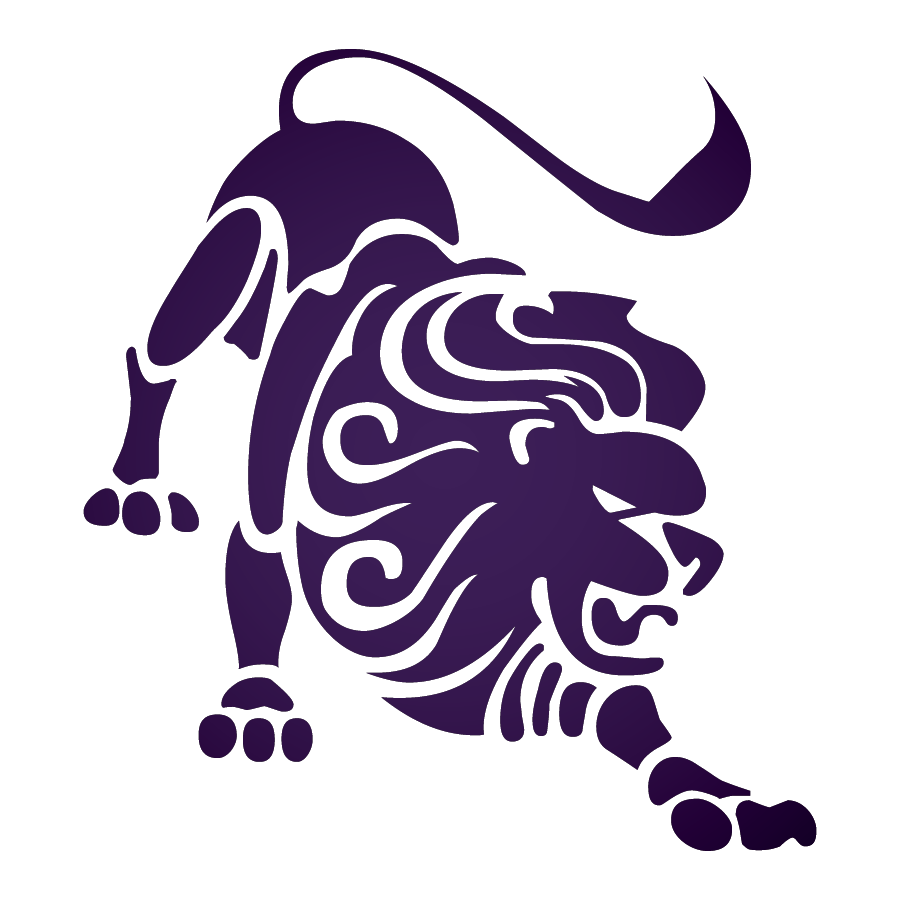
Image source: VOLTLIN
When exploring astrology, the imagery associated with the fifth sign of the zodiac is among the most recognizable. The lion has served as a powerful emblem of royalty, strength, and vitality across numerous ancient cultures. However, understanding what the zodiac symbol for Leo truly represents requires looking beyond the basic animal archetype. From the anatomical structure of the ♌︎ glyph to the ancient Egyptian agricultural cycles that first gave the constellation its meaning, the symbolism of Leo is deeply layered.
This article breaks down the visual anatomy of the Leo glyph, explores the mythological origins of the lion symbol, and explains how these ancient associations continue to shape our understanding of Leo personality traits today.
What Does the Leo Glyph ♌︎ Actually Represent
In astrology, every zodiac sign has a specific shorthand symbol known as a glyph. The Leo glyph (♌︎) is characterized by a small circle from which a curved line extends upward, arches over, and swoops down into a tail. While it may look like a simple cursive squiggle to the untrained eye, astrologers and historians attribute several specific meanings to its design.
The Mane and the Spine
The most widely accepted traditional interpretation of the ♌︎ glyph is that it represents the physical form of a lion. The initial small circle depicts the lion's head, while the sweeping arch represents the animal's prominent mane and strong, flexible spine. The final downward curve signifies the lion's tail. This visual connection emphasizes the physical pride and upright posture associated with the sign.
The Two Halves of a Heart
In medical astrology, each zodiac sign governs a specific part of the human body. Leo is the ruler of the physical heart, the upper back, and the spine. Modern astrological interpretations, such as those detailed by the AstroTwins at Astrostyle, suggest that the ♌︎ glyph also represents the two halves of a human heart. The swooping lines mimic the chambers and valves of the heart, reflecting Leo's association with warmth, generosity, and "leading with the heart."
The Circle of Spirit
Astrological glyphs are constructed using foundational geometric shapes: the circle (spirit), the cross (matter), and the crescent (mind). The Leo glyph begins with a closed circle. Because Leo is ruled by the Sun, this circle represents the "Circle of Spirit"—a symbol of pure potentiality, life force, and the ego. The line flowing out of the circle represents that solar energy radiating outward into the world.
How to Draw the Leo Symbol Correctly
If you are looking to draw or tattoo the ♌︎ symbol, the traditional stroke order matters for symmetry:
- Start on the left side and draw a small, counter-clockwise circle.
- As you close the circle at the top, continue the line upward and to the right, creating a large, smooth arch (the mane).
- Bring the line down and curve it back up slightly at the end to form the tail.
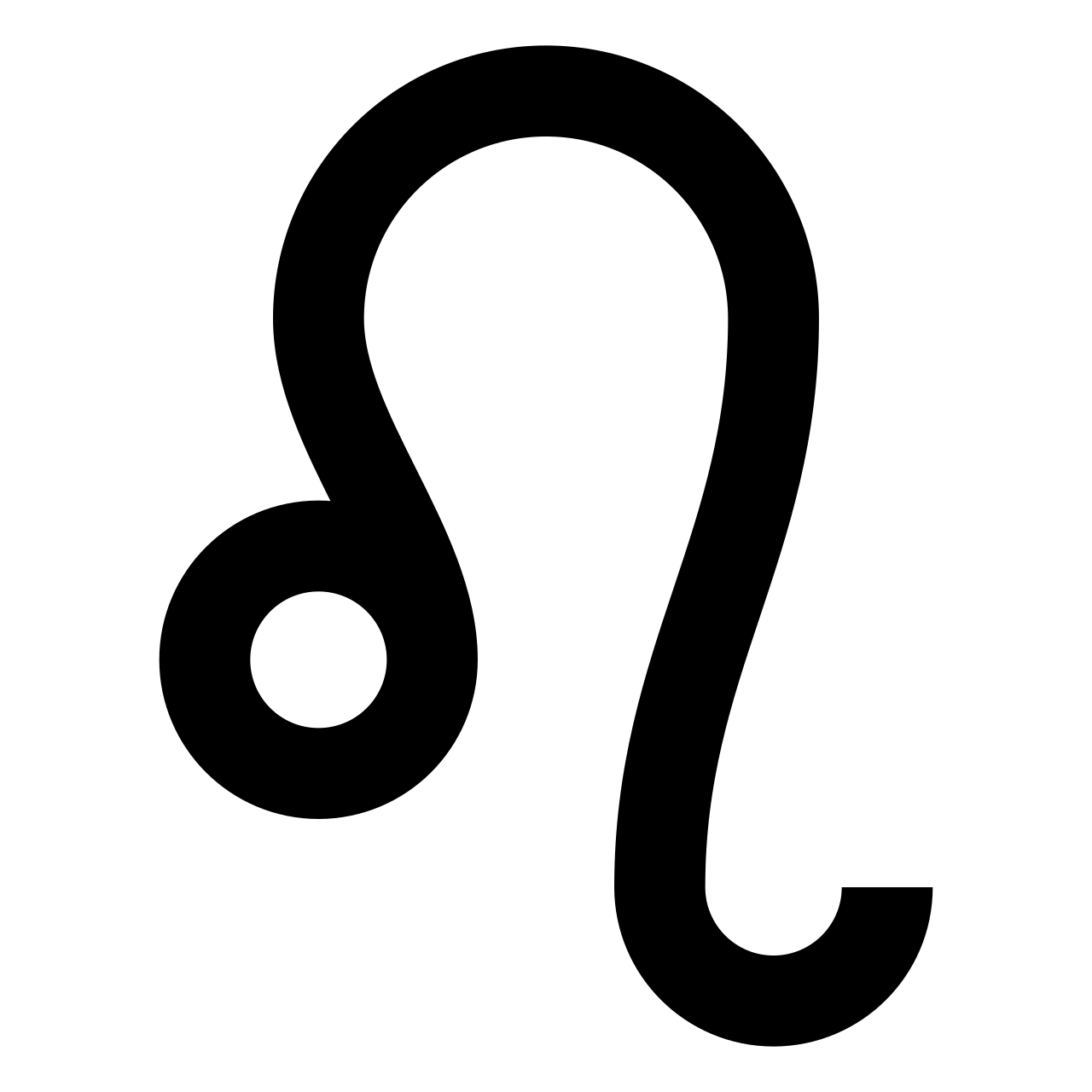
Image source: Wikipedia
Why Is Leo Represented by a Lion
The association between the Leo constellation and the lion is not a modern invention. It is one of the oldest recognized constellations, with roots stretching back to Mesopotamian, Egyptian, and Greek civilizations. The symbol of the lion was chosen by these ancient cultures for very specific environmental and mythological reasons.
Long before the Greeks formalized the zodiac, the ancient Egyptians revered the Leo constellation, which they called "Knem." According to historical records, the heliacal rising of this constellation coincided with the annual flooding of the Nile River. This flood was crucial for survival, as it deposited nutrient-rich silt onto the farmland. Because the lions of the desert would migrate toward the river to escape the summer heat during this exact time, the Egyptians associated the life-giving waters with the lion. This is why many ancient Egyptian fountains and waterways feature lion-headed gargoyles.
In Greek mythology, the constellation is intrinsically linked to the Nemean Lion. According to Britannica's historical overview, defeating the Nemean Lion was the first of the Twelve Labors of Heracles (Hercules). This mythical beast had impenetrable golden fur that could not be pierced by mortal weapons. Heracles ultimately defeated the lion using his bare hands and immense strength. To honor this epic battle, Zeus placed the lion in the night sky as a constellation.
Because the lion is the apex predator of its environment, it naturally became a symbol of royalty and monarchical power. This is evident in historical artifacts, such as the golden throne of King Tutankhamun, which features lion heads and clawed feet. The astrological symbol of Leo inherited this royal archetype, which is why the sign is continually associated with leadership, sovereignty, and a commanding presence.
How the Lion Symbol Influences Leo Personality Traits
Astrology posits that the symbol of a sign provides a psychological blueprint for the people born under it. The characteristics of the lion translate directly into the core personality traits of a Leo.
The King of the Jungle Archetype
Lions are highly social animals that live in prides, yet they maintain a strict hierarchy where the dominant lion is respected and deferred to. Similarly, Leos are known for their natural leadership abilities and their desire to be at the center of their social circles. They possess a magnetic confidence that draws others to them, much like the gravitational pull of their ruling planet, the Sun.
The "Lion in the Cave" Metaphor
While Leos are famous for their extroverted, theatrical nature, there is a lesser-known side to the lion symbol. As noted by astrological resources like ZodiacSign.com, lions spend a significant portion of their day resting in the shade or retreating to a den. This translates to the "Lion in the Cave" metaphor for Leo individuals. Despite their public bravado, Leos require substantial amounts of private downtime to recharge their social batteries. If a Leo feels threatened or exhausted, they will retreat to their "cave" and can become highly protective of their personal space.
Fixed Fire Energy
In astrological mechanics, Leo is a Fire sign with a "Fixed" modality. While fire is naturally erratic and unpredictable, a *fixed* fire is like a controlled hearth or a steady furnace. The lion symbol perfectly encapsulates this. A lion does not waste energy darting around unnecessarily; it conserves its power, remaining still and stable until it is time to strike. This gives Leos a level of persistence, loyalty, and determination that is highly regarded among the zodiac signs.
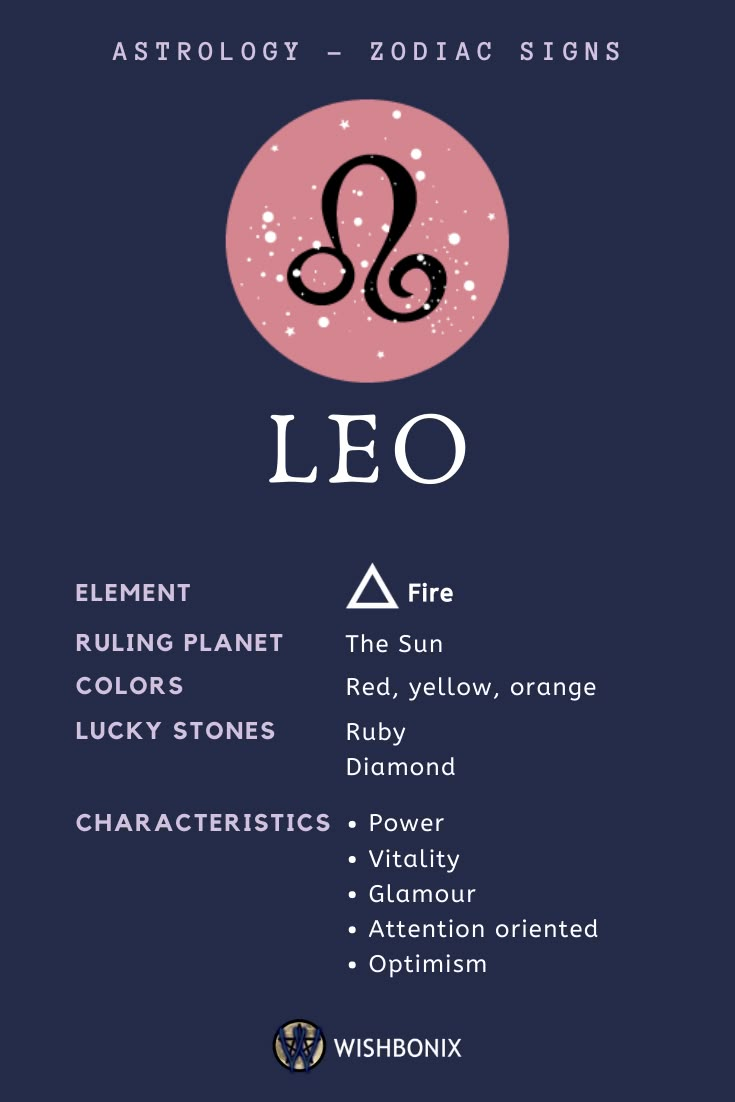
Image source: Pinterest
When Does the Sun Enter Leo and Why Do Dates Change
The standard dates for the Leo zodiac sign are typically listed as July 23 to August 22. However, if you were born on the first or last day of this window, you might find conflicting information depending on the source you read. This is due to the astronomical reality of the Sun's movement.
The 2026 Date Shift
The exact moment the Sun crosses the 120th degree of celestial longitude (the beginning of Leo) changes slightly from year to year. This variation is caused by the discrepancy between our 365-day Gregorian calendar and the actual solar year (which is roughly 365.24 days). Because of leap years, the start date shifts. For example, in the year 2026, the Sun officially enters Leo on July 22, not the standard July 23.
Understanding the Cusp
People born on these transitional days are often said to be born "on the cusp." If you are born on July 22 or 23, or August 22 or 23, simply looking at a general magazine horoscope is not enough to determine your sign. You must consult an astrological ephemeris (a table of planetary movements) or use a natal chart calculator that factors in your exact birth year, time, and location to know definitively if your Sun is in Cancer, Leo, or Virgo.
How Does Leo Compare to Other Fire Signs
Leo shares the Fire element with Aries and Sagittarius. While all three signs are known for their passion, energy, and enthusiasm, the way they express that fire is vastly different, largely due to their symbols and ruling planets.
Aries (The Ram)
Modality: Cardinal
Ruler: Mars
The Fire Type: The Spark. Aries represents the initial explosion of fire. It is impulsive, fast-moving, and pioneering. Like a ram charging forward, Aries energy is about initiating action, but it can burn out quickly if not sustained.
Leo (The Lion)
Modality: Fixed
Ruler: The Sun
The Fire Type: The Hearth. Leo represents a sustained, glowing fire. It provides warmth, light, and a center for people to gather around. Like the lion, it is stable, enduring, and focused on maintaining its territory and pride.
Sagittarius (The Archer), the third fire sign, represents mutable fire—like a wildfire spreading rapidly across a forest, driven by the winds of Jupiter to explore new philosophical and physical territories. Among the three, Leo stands out as a top choice for situations requiring long-term stability and consistent leadership.
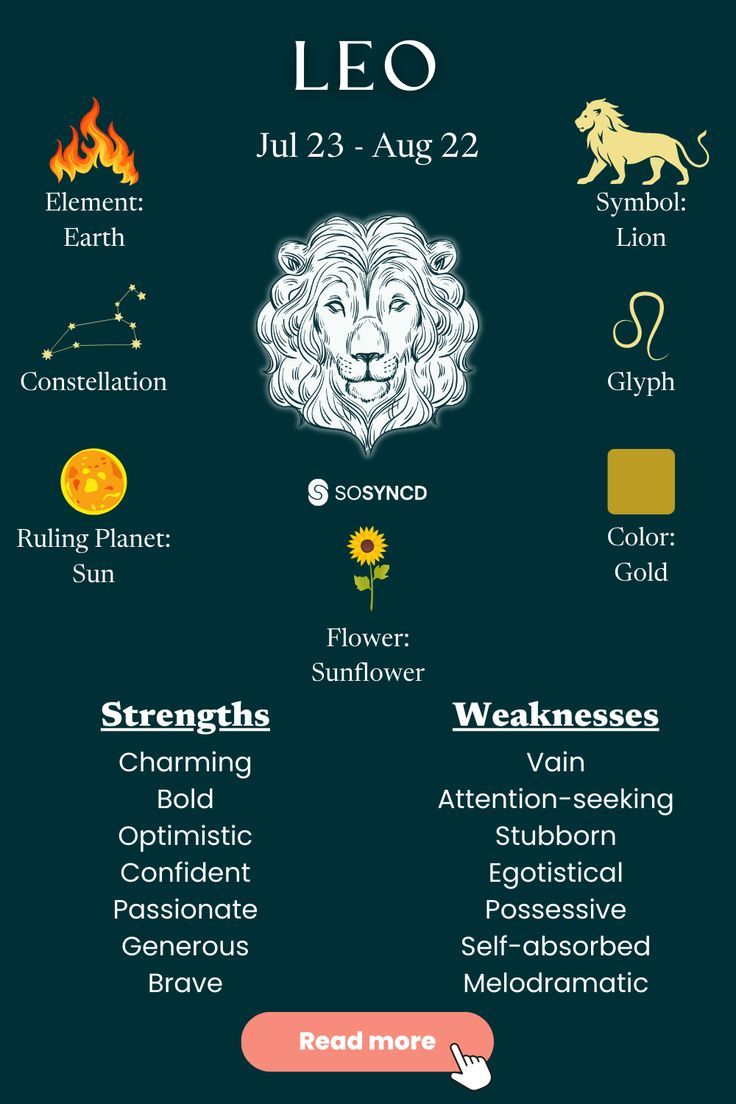
Image source: Pinterest
Advanced Astrology Rulerships Exaltations and Falls
To fully grasp the power of the Leo symbol, one must look at its planetary relationships. In astrology, signs are strengthened or weakened depending on which planets are moving through them.
The Sun: A Ruler That Never Retrogrades
Leo is the only sign in the zodiac ruled by the Sun. In astrological terms, the Sun is a "luminary" rather than a planet. A critical distinction that gives Leos their trademark consistency is that, from our perspective on Earth, the Sun never goes retrograde. While Mercury, Venus, and Mars appear to move backward in the sky, causing periods of internal review or delay, the Sun always moves forward. This solar consistency is why Leos are often perceived as highly reliable and straightforward; their core energy source does not waver.
Traditional vs. Modern Dignities
Astrological systems assign "dignities" to planets based on how comfortable they are in a specific sign.
| Planetary Status | Planet in Leo | Astrological Meaning |
|---|---|---|
| Domicile (Ruler) | The Sun | The Sun is at its maximum strength here, expressing pure vitality, ego, and life force. |
| Detriment | Saturn & Uranus | Saturn (restriction) and Uranus (chaos) struggle in Leo. Leo wants to shine warmly and consistently, which conflicts with Saturn's cold boundaries and Uranus's unpredictable disruptions. |
| Exaltation (Modern) | Neptune | While traditional astrology assigns no exaltation to Leo, modern astrologers often point to Neptune. Neptune governs glamour, cinema, and illusion, aligning perfectly with Leo's theatrical and creative nature. |
| Fall (Modern) | Pluto | Pluto represents hidden depths, secrets, and the underworld. This energy is in "fall" (weakened) in Leo, a sign that demands everything be brought into the bright, visible light of the Sun. |
The Leo Symbol in Tarot and Art
The symbolism of the lion extends far beyond natal charts and horoscopes, heavily influencing esoteric arts like Tarot and modern pop culture.
The Strength Card Connection
In the traditional Rider-Waite Tarot deck, the zodiac sign of Leo is associated with the Major Arcana card number 8: Strength. The artwork on this card features a woman calmly and gently closing the jaws of a fully grown lion. Above her head floats an infinity symbol.
This imagery is profound. It suggests that true strength is not about brute force or aggressive dominance (which would be a Mars/Aries approach). Instead, it is about "soft power"—compassion, emotional control, and inner fortitude. The woman taming the lion represents the higher self taming the primal, ego-driven instincts of the Leo energy. As highlighted by Allure's analysis of Leo traits, this dynamic perfectly illustrates the Leo journey: learning to balance their roaring pride with genuine, warm-hearted compassion.
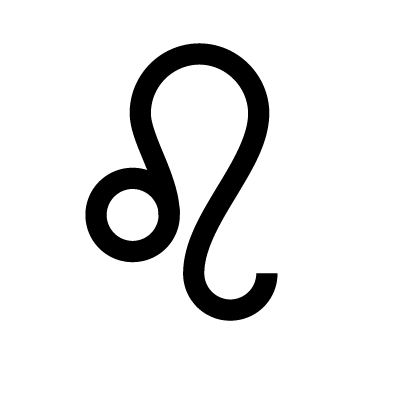
Image source: Symbolikon
Tattoos and Modern Design
Because of its striking visual appeal, the Leo symbol is highly popular in tattoo art and graphic design. According to Adobe Stock's visual database, there are over 120,000 commercial representations of the Leo symbol, ranging from minimalist geometric glyphs to elaborate, hyper-realistic lions with flaming manes. Those looking to capture the essence of the sign often combine the ♌︎ glyph with solar motifs, such as sunbursts or crowns, to emphasize the sign's royal and planetary rulers.
Frequently Asked Questions
Final Thoughts on the Lion of the Zodiac
Understanding the zodiac symbol for Leo requires looking past the simple image of a jungle cat. The lion and the ♌︎ glyph represent a complex intersection of ancient agricultural history, Greek mythology, and solar astronomy. By recognizing the depth of this symbol, we gain a clearer picture of the Leo personality—one defined by warmth, stability, and a deeply rooted sense of pride.
- The Primary Symbol: The Lion represents royalty, courage, and the "king of the jungle" social hierarchy.
- The Glyph (♌︎): Visually depicts the lion's head, mane, and spine, while also symbolizing the human heart in medical astrology.
- The Ruling Body: Ruled by the Sun, Leo benefits from a constant, forward-moving energy source that never goes retrograde.
- Historical Roots: The symbol dates back to ancient Egypt, where the constellation's appearance signaled the life-giving flooding of the Nile.
- The Modality: As a Fixed Fire sign, Leo offers sustained, reliable warmth rather than erratic, impulsive sparks.
- The 2026 Shift: The Sun's entry into Leo changes annually; in 2026, the season officially begins on July 22.
If you were born on the cusp of Cancer and Leo, check a reliable astrological ephemeris for your specific birth year to confirm exactly where the Sun was positioned at your time of birth.