What Are the Zodiac Signs in Jan and What Do They Mean?
The two zodiac signs that fall in January are Capricorn and Aquarius. If you were born between January 1 and January 19, your sun sign is Capricorn, an Earth sign known for discipline and ambition. If you were born between January 20 and January 31, your sun sign is Aquarius, an Air sign recognized for its visionary and independent nature. The exact transition day is January 20th, though the precise hour changes slightly each year.
How the January Zodiac Calendar Splits Between Two Signs
The astrological calendar does not align perfectly with the Gregorian calendar months we use today. Instead of a single sign dominating January, the month serves as a bridge between two distinct astrological seasons. The first part of the month belongs to Capricorn, while the latter part transitions into Aquarius.
According to standard Western astrology, the sun travels through the 30-degree sector of the zodiac known as Capricorn from approximately December 22 to January 19. During this period, the focus is on structure, goal-setting, and building foundations for the new year. This aligns perfectly with the cultural habit of making New Year's resolutions, a deeply Capricornian activity.
On or around January 20th, the sun crosses the threshold into Aquarius, where it remains until approximately February 18. This shift brings a noticeable change in astrological energy, moving from the rigid, traditional earthiness of Capricorn to the forward-thinking, intellectual airiness of Aquarius. Historical records from Britannica note that this division of the sky into 12 equal parts dates back to Babylonian astronomy, designed to track the sun's apparent path across the celestial sphere.
It is important to note that the exact moment the sun enters Aquarius fluctuates slightly from year to year due to the Earth's elliptical orbit and the mechanics of leap years. For instance, in 2026, the transition occurs on January 20th. However, depending on your time zone, the exact hour of the shift can vary, which is why individuals born on the 19th or 20th often need to consult a precise birth chart to confirm their sun sign.
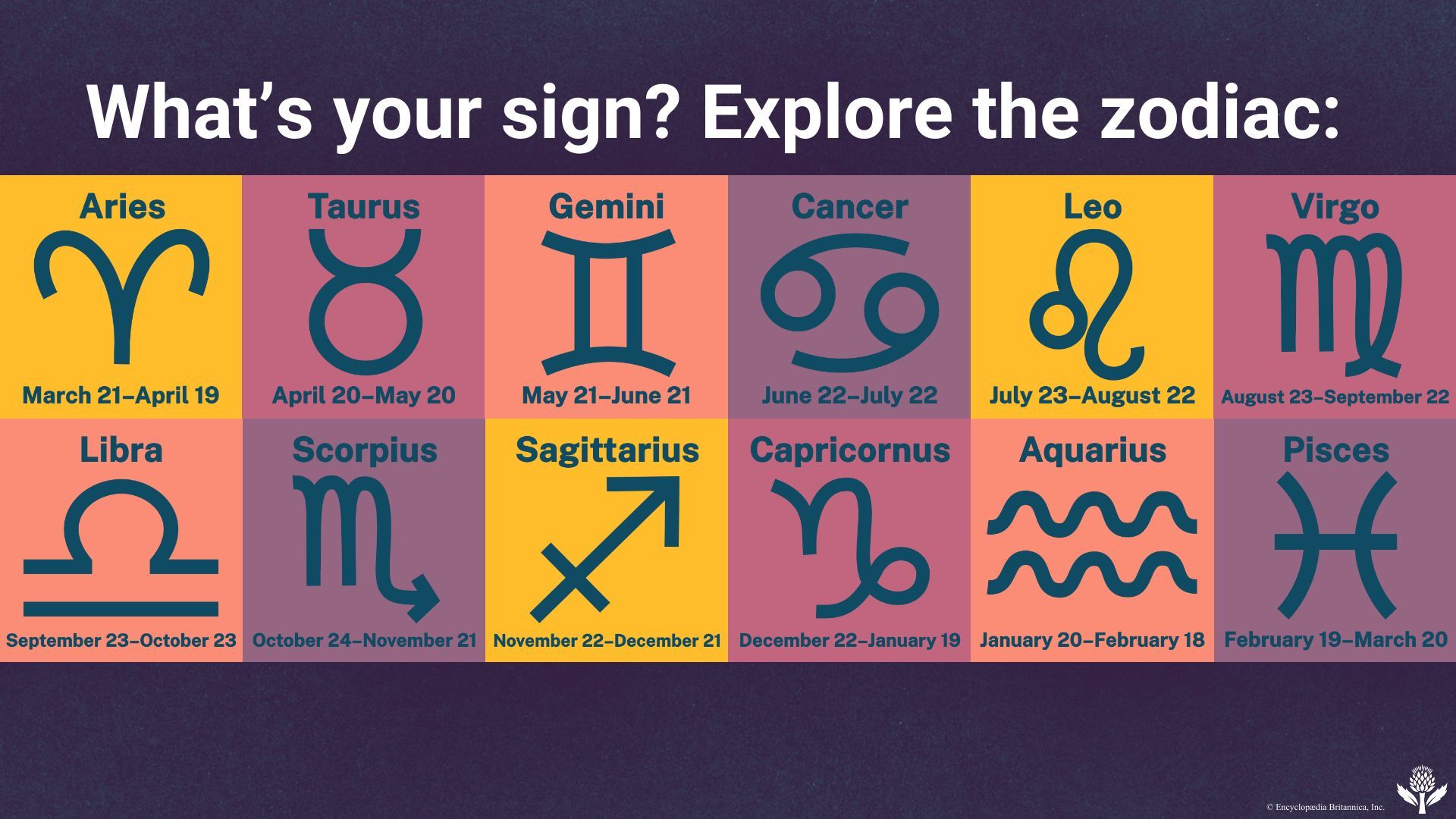
Image source: Britannica
What Makes a January Capricorn Unique?
Individuals born between January 1 and January 19 fall under the sign of Capricorn. Represented by the Sea-Goat—a mythical creature with the upper body of a goat and the lower body of a fish—Capricorns are uniquely equipped to navigate both the material world (climbing the rocky mountain) and the emotional realm (swimming through deep waters).
Capricorn is a Cardinal Earth sign. In astrological terms, "Cardinal" signs are the initiators of the seasons. Because the Capricorn season begins at the winter solstice, these individuals are often viewed as natural self-starters who bring a sense of initiation and leadership to their endeavors. Their Earth element grounds them, making them highly practical, reliable, and focused on tangible results.
The ruling planet of Capricorn is Saturn, the taskmaster of the solar system. Saturn's influence imparts a strong sense of duty, boundaries, and time management. This planetary rulership is why January Capricorns are frequently described as "old souls." They often exhibit a maturity beyond their years, even in childhood. Astrologer Danielle Rothschild has famously referred to young Capricorns as "boss babies," noting their inherent desire to organize their environment and take charge from an early age, a trait highlighted in demographic studies of January babies.
- Discipline
- Capricorns possess a remarkable ability to delay gratification. They are willing to put in long hours of hard work if it means achieving a long-term goal.
- Pragmatism
- Rather than getting lost in daydreams, January Capricorns focus on what is realistic and achievable. They build step-by-step plans to reach the summit of their personal mountains.
- Loyalty
- While they may seem reserved or stoic on the outside, Capricorns are fiercely loyal to their inner circle. They view relationships as long-term investments and take their commitments seriously.
Despite their reputation for being all work and no play, the "fish" half of the Sea-Goat indicates a deep well of emotional intuition. January Capricorns simply prefer to process their feelings privately, presenting a composed and capable exterior to the world.
Why January Aquarians Are Often Misunderstood
Starting on January 20th, the astrological calendar shifts to Aquarius. One of the most common misconceptions in astrology is that Aquarius is a Water sign. Because its symbol is the Water Bearer and its name contains the prefix "aqua," many people assume it belongs to the emotional water triad. In reality, Aquarius is an Air sign, focused on intellect, communication, and social concepts.
The Water Bearer symbol represents the act of pouring out knowledge, truth, and life-giving ideas to humanity, rather than pouring actual water. This makes January Aquarians highly conceptual thinkers. They are often deeply concerned with social justice, community frameworks, and humanitarian causes. Astrological analyses frequently highlight Aquarius as the visionary of the zodiac, always looking toward the future and questioning the status quo.
Aquarius has a unique planetary rulership. Traditionally, it was ruled by Saturn, which gives January Aquarians a surprising capacity for structure and discipline when it comes to their ideals. However, in modern astrology, Aquarius is co-ruled by Uranus, the planet of sudden changes, innovation, and rebellion. This dual rulership creates a fascinating personality: someone who is highly organized in their thinking (Saturn) but radically unconventional in their ideas (Uranus).
Because they are so focused on the collective and the future, January Aquarians can sometimes appear emotionally detached or aloof in one-on-one interactions. They process the world through logic and broad social theories rather than immediate emotional reactions. This intellectual distance is not a lack of caring; rather, it is their way of maintaining the objective perspective needed to solve complex problems.
How to Tell if You Were Born on the Capricorn-Aquarius Cusp
If your birthday falls between January 16 and January 23, you were born on what astrologers call the "Cusp of Mystery and Imagination." A cusp refers to the transitional period when the sun is moving out of one zodiac sign and into the next. While technically you can only have one sun sign based on the exact degree of the sun at your moment of birth, many astrologers believe that individuals born during this window exhibit a blended personality.
The Capricorn-Aquarius cusp is particularly fascinating because it bridges two very different energies. Capricorn is traditional, rule-abiding, and focused on the past and present. Aquarius is unconventional, rebellious, and focused entirely on the future. When these traits combine in a January baby, the result is often a highly driven individual who uses traditional methods to achieve radical, innovative goals.
People born on this cusp often report feeling an internal tug-of-war. One day, they may feel the heavy, Saturnian urge to organize their lives, climb the corporate ladder, and adhere to strict routines. The next day, the Uranian influence may strike, giving them the urge to quit their job, travel the world, or start a disruptive new project.
To determine your true sun sign if you were born on January 19 or 20, you cannot rely on general date ranges. Because the Earth's orbit is not a perfect circle and a year is roughly 365.24 days long, the exact time the sun enters Aquarius shifts annually. You must use an astrological birth chart calculator, inputting your exact date, year, time, and city of birth. If you were born at 10:00 AM on January 20th in one year, you might be a Capricorn, but at the exact same time the following year, you might be an Aquarius.
Comparing Capricorn and Aquarius at a Glance
To fully understand the dynamics of the January zodiac signs, it helps to look at their foundational astrological components side by side. While they share the month of January and the traditional ruling planet of Saturn, their expressions of that energy are vastly different.
| Feature | Capricorn (Jan 1 - Jan 19) | Aquarius (Jan 20 - Jan 31) |
|---|---|---|
| Element | Earth (Practical, grounded, material) | Air (Intellectual, social, conceptual) |
| Modality | Cardinal (Initiator, leader, self-starter) | Fixed (Sustainer, determined, steadfast) |
| Ruling Planet(s) | Saturn (Structure, time, karma) | Uranus (Innovation) & Saturn (Structure) |
| Symbol | The Sea-Goat | The Water Bearer |
| Core Motivation | To achieve, build, and secure. | To innovate, reform, and connect. |
| General Vibe | The Architect / The Executive | The Visionary / The Rebel |
This comparison highlights why January is a month of profound transition. It begins with the grounded, goal-oriented energy necessary to start a new year and ends with the visionary, forward-thinking energy needed to imagine a better future.
Why Your Astrological Sign Might Not Match the Constellations
A common point of confusion for those researching their January zodiac sign is the discrepancy between astrology and astronomy. If you point a telescope at the sun on January 1st, the sun is not actually in the constellation of Capricorn. In fact, it is physically passing through the constellation of Sagittarius. This discrepancy is due to a phenomenon known as the Precession of the Equinoxes.
Western astrology, also known as Tropical astrology, is based on the seasons, not the current position of the stars. The system was codified by the Babylonians and later refined by Ptolemy around the 2nd century CE. At that time, the astrological signs aligned roughly with the physical constellations. The start of the astrological year (Aries) was fixed to the vernal equinox.
However, the Earth has a slight "wobble" on its axis, completing one full rotation of this wobble approximately every 26,000 years. Over the past two millennia, this wobble has caused the physical constellations to shift backward by about 24 degrees relative to our seasons. The Old Farmer's Almanac notes that while astronomers track the physical stars, Western astrologers continue to use the fixed seasonal map.
Therefore, when we say someone is a January Capricorn, we are referring to the 30-degree sector of the ecliptic that follows the winter solstice, regardless of where the physical stars currently reside. This seasonal approach is why Capricorn is associated with the cold, harsh realities of mid-winter, requiring discipline and endurance to survive.
What Science and Statistics Say About January Birthdays
Moving beyond the stars, demographic data provides a fascinating look at what it means to be born in January. Statistically speaking, January babies are relatively rare. According to birth data trends in the United States, January is consistently ranked as the least common birth month, averaging around 10,721 daily births.
Within the month itself, January 1st stands out as the second rarest birthday of the entire year (surpassed only by Christmas Day and leap day, February 29th). The most popular day to be born in January is the 24th, falling squarely in Aquarius territory. This rarity adds an objective layer of uniqueness to the January-born individual.
Scientific studies have also explored the potential biological impacts of birth months. A notable 2009 study suggested that females born in the first half of the year, including January, may possess slight fertility advantages compared to those born in the autumn. Furthermore, research into seasonal affective disorder and circadian rhythms suggests that the amount of daylight exposure a mother receives during the final trimester can subtly influence a baby's early development and temperament.
Culturally, the belief in astrology remains strong among younger demographics. Recent surveys indicate that approximately 37% of people under the age of 30 believe in astrology to some degree. For these individuals, identifying as a Capricorn or an Aquarius provides a framework for self-reflection, helping them articulate their strengths, weaknesses, and interpersonal dynamics.
How Different Cultures Celebrate the Sun Entering Capricorn
While Western astrology focuses heavily on personality traits, other cultures view the sun's movement into Capricorn through a lens of seasonal and agricultural significance. In Vedic (Hindu) astrology, which uses the Sidereal system (tracking the actual physical constellations), the sun's entry into Capricorn occurs later in the month, typically around January 14th or 15th.
This transition is celebrated across India and Nepal as Makara Sankranti. "Makara" is the Sanskrit word for Capricorn, and "Sankranti" means transition. This festival is one of the few ancient Indian festivals observed according to solar cycles rather than the lunar calendar.
Makara Sankranti marks the end of the month with the winter solstice and the beginning of longer, warmer days—a period known as Uttarayan. It is a harvest festival celebrating the abundance of nature. Traditions vary by region but often include flying colorful kites, taking ritual dips in holy rivers, and sharing sweets made of sesame seeds and jaggery. The festival embodies the Capricornian themes of hard work yielding tangible rewards and the transition from darkness into light.
How to Use Zodiacal Releasing to Map Your Life Chapters
For those looking to go deeper than basic sun sign traits, Hellenistic astrology offers an advanced timing technique called Zodiacal Releasing. This method divides a person's life into distinct chapters, much like reading a biography, and is highly dependent on the modality of your signs.
Zodiacal Releasing utilizes mathematical points in the birth chart, most notably the "Lot of Fortune." According to astrologer Helena Woods, this technique helps identify "Peak Periods"—times in your life when your career, public standing, or personal development will be highly active and visible.
If you are a January Capricorn, your sign's modality is Cardinal. In Zodiacal Releasing, if your Lot of Fortune falls in a Cardinal sign, your major life chapters and peak periods will be activated whenever the time-lord reaches Capricorn, Aries, Cancer, or Libra. These periods often correlate with major initiations, such as starting a new business, getting married, or making a significant move.
Conversely, if you are a January Aquarius, your modality is Fixed. Your peak periods will occur when the time-lord reaches Fixed signs (Aquarius, Taurus, Leo, Scorpio). For Aquarians, these chapters often involve consolidating power, sustaining long-term projects, or experiencing profound internal shifts regarding personal values and community involvement. Understanding this technique allows January babies to view their lives as a structured narrative rather than a series of random events.
What Are the Traditional Symbols for January Birthdays?
Astrology is just one way we categorize birth months. January is also rich in traditional symbols, including birthstones and birth flowers, which share thematic similarities with Capricorn and Aquarius traits.
The official birthstone for January is the Garnet. The name derives from the Latin word "granatum," meaning pomegranate, due to the stone's resemblance to the deep red seeds of the fruit. Historically, garnets were worn by royalty and warriors as protective talismans. The stone symbolizes health, wealth, and enduring happiness. Its deep, grounding red color perfectly complements the Earth energy of Capricorn, while its association with truth and protection resonates with the Aquarian desire for authenticity.
January claims two birth flowers. The Carnation is known for its ruffled petals and longevity after being cut, symbolizing devotion, loyalty, and love—traits highly valued by Capricorns. The Snowdrop, a delicate white flower that pushes through the frozen winter soil, symbolizes hope, rebirth, and the ability to overcome adversity. The Snowdrop's resilience and forward-looking nature align beautifully with the visionary energy of Aquarius.
Frequently Asked Questions
Is January 20 a Capricorn or an Aquarius?
January 20th is a transition day, meaning the sun moves from Capricorn into Aquarius on this exact date. Because the precise hour of this transition changes every year based on the Earth's orbit, someone born on January 20th could be either sign. To know for sure, you must calculate a natal chart using your exact time and city of birth.
What is the rarest zodiac sign in January?
Aquarius is statistically rarer than Capricorn. Because the Aquarius season spans from late January through mid-February (the shortest month of the year), there are fewer days in the calendar year dedicated to Aquarius. Additionally, birth rate data shows that late January and February generally have lower daily birth averages compared to the summer months.
Are January babies considered smart?
Both January signs are associated with high intelligence, though they express it differently. Capricorns are known for their practical, strategic, and business-oriented intelligence. They excel at planning and execution. Aquarians are known for their conceptual, analytical, and innovative intelligence. They excel at problem-solving and thinking outside traditional frameworks.
What element is Aquarius?
Despite its symbol (the Water Bearer) and its name, Aquarius is an Air sign. In astrology, the Air element governs the mind, communication, intellect, and social connections. The "water" being poured by the Water Bearer is symbolic of knowledge and truth being shared with humanity, rather than physical water.
Which January sign is more successful?
Success is subjective and depends on how it is measured. Capricorns are widely regarded as highly successful in traditional corporate, financial, and structured environments due to their discipline and ambition. Aquarians often find success in technology, humanitarian efforts, and entrepreneurial ventures where they can disrupt the status quo and introduce innovative ideas.
Do Capricorns and Aquarians get along?
They can form a highly complementary pair if they respect their differences. Capricorn provides the structure, funding, and practical planning, while Aquarius provides the vision, innovation, and big-picture thinking. However, conflict can arise if Capricorn finds Aquarius too unpredictable, or if Aquarius finds Capricorn too rigid and traditional.
Summary of January Zodiac Traits and Key Takeaways
The month of January offers a fascinating astrological journey, starting with the grounded discipline required to build foundations and ending with the intellectual freedom needed to envision the future. Whether you are a pragmatic Sea-Goat or a visionary Water Bearer, the January zodiac signs represent resilience and forward momentum.
- Two distinct signs: January is split between the Earth sign Capricorn (Dec 22 – Jan 19) and the Air sign Aquarius (Jan 20 – Feb 18).
- The transition point: The sun shifts signs on January 20th, requiring a birth chart for those born on the cusp to confirm their exact placement.
- Capricorn traits: Ruled by Saturn, Capricorns are recognized for their discipline, ambition, and practical approach to achieving long-term goals.
- Aquarius traits: Co-ruled by Saturn and Uranus, Aquarians stand out for their independent, humanitarian, and highly intellectual nature.
- Birth rarity: January is statistically the least common birth month in the US, making January birthdays relatively rare.
- Traditional symbols: The month is represented by the deep red Garnet stone and the resilient Carnation and Snowdrop flowers.