How to Get Accurate Horoscope Predictions for Your Zodiac Sign Today
Millions of people check their horoscope predictions every morning, seeking guidance on love, career, and financial decisions. Yet, a common frustration persists: why does one website promise a day of abundant success while another warns of impending conflict? The answer lies not in the stars themselves, but in the mathematical and philosophical systems used to interpret them.
As we navigate the complex astrological weather of 2026, understanding how these predictions are formulated is essential. Moving beyond casual entertainment, professional astrology relies on intricate celestial mechanics, historical texts, and precise mathematical modeling. By learning how to read your chart correctly, you can transform generic advice into a strategic tool for daily mindfulness and long-term planning.
Image source: AstroSage
Understanding the Four Zodiac Elements
Before diving into complex planetary transits, it is helpful to understand the foundational building blocks of horoscope predictions: the four elements. Every zodiac sign belongs to one of these elemental categories, which dictates how that sign processes cosmic energy and responds to daily forecasts.
Driven by action and intuition. Fire signs typically experience planetary transits as sudden bursts of inspiration or frustration. Their predictions often focus on leadership opportunities and physical vitality.
Grounded in practicality and material security. Earth signs respond to transits slowly and steadily. Their horoscopes frequently highlight financial planning, career stability, and physical health routines.
Motivated by intellect and social connection. Air signs process cosmic shifts through communication and ideas. Their daily insights usually revolve around networking, learning, and resolving interpersonal conflicts.
Guided by emotion and intuition. Water signs are highly sensitive to lunar phases. Their predictions heavily emphasize emotional boundaries, romantic relationships, and psychological healing.
When reading a general forecast, knowing your element helps contextualize the advice. For instance, a challenging transit of Mars might prompt a Fire sign to start an argument, while it might cause a Water sign to retreat inward and experience emotional turbulence.
Why Do Different Sites Give You Different Horoscope Predictions?
If you have ever felt confused by conflicting daily horoscopes, you are experiencing the divide between the two major astrological systems: Western and Vedic. This discrepancy is not a matter of one being "right" and the other "wrong," but rather a difference in celestial measurement and psychological focus.
The Tropical vs. Sidereal Divide
Western astrology uses the Tropical Zodiac, which is fixed to the Earth's seasons. In this system, Aries always begins on the Vernal Equinox (around March 21). However, due to a phenomenon called the Precession of the Equinoxes—a slow wobble in the Earth's axis—the backdrop of the stars shifts by about one degree every 72 years.
Vedic astrology (Jyotisha) uses the Sidereal Zodiac, which is fixed to the actual observable constellations in the sky. Because of the Earth's wobble, there is currently a roughly 23-degree difference (known as the Ayanamsa) between the two systems. This means that if you are a late-degree Taurus in Western astrology, you are likely an Aries in the Vedic system.
Sun Sign vs. Moon Sign Focus
Furthermore, the focal point of the prediction changes depending on the platform you visit. Popular Western lifestyle publications, such as ELLE's daily horoscopes, base their forecasts primarily on your Sun sign. The Sun represents your ego, your core identity, and your external life path. It is excellent for broad career advice and understanding your overarching life goals.
Conversely, traditional Vedic platforms like AstroSage generate daily predictions based on your Moon sign (Rashi). The Moon governs the mind, emotions, and internal reactions. Because the Moon moves quickly—changing signs every two and a half days—Vedic astrologers consider it a highly accurate metric for predicting daily mood fluctuations and immediate events.
Comparing Western and Vedic Astrology Systems
To fully grasp how to utilize horoscope predictions, it is helpful to see the structural differences between these two ancient traditions. Both offer valuable insights, but they serve different diagnostic purposes.
| Feature | Western Astrology | Vedic Astrology (Jyotisha) |
|---|---|---|
| Primary Focus | Sun Sign (Ego, Identity, External Path) | Moon Sign (Emotion, Mind, Destiny) |
| Zodiac Measurement | Tropical (Fixed to Earth's Seasons) | Sidereal (Fixed to Observable Constellations) |
| Predictive Tools | Planetary Transits & Progressions | Dashas (Planetary Time Cycles) & Transits |
| Historical Root | Ptolemaic Tradition (Tetrabiblos) | Sage Parashara (Brihat Parashara Horasastra) |
| Core Philosophy | Psychological evolution and character analysis | Karmic patterns and specific event timing |
Western astrology, heavily influenced by 20th-century psychology, excels at helping individuals understand their personality traits and psychological blocks. Vedic astrology, rooted in the ancient texts of Sage Parashara, is widely regarded as a highly specific predictive science, focusing on the exact timing of life events such as marriage, career changes, and financial windfalls.
How Are Professional Horoscope Predictions Actually Calculated?
Modern horoscope predictions are not generated through mere intuition; they are the result of complex mathematical calculations tracking the movement of celestial bodies. When an astrologer writes a forecast, they are essentially translating an ephemeris—a table of planetary coordinates—into human behavioral trends.
The Mathematical Foundation and Stochastic Modeling
Recent academic explorations into astrology have begun applying modern statistical frameworks to ancient practices. According to research published in the World Journal of Advanced Research and Reviews (WJARR), astrological predictions can be analyzed through optimization techniques and "Stochastic Probability Convergence."
In simple terms, this means that planetary cycles are treated as variables in a complex algorithm. Astrologers do not predict a fixed, unavoidable fate. Instead, they calculate periods of high probability for certain types of energy. For example, if Saturn is forming a difficult angle to your natal Mars, the mathematical model suggests a high probability of friction or delayed action. The prediction warns you of this "energy window," allowing you to navigate it strategically.
The Nine Celestial Influencers
Professional predictions rely on tracking the nine primary influencers (Grahas) of Vedic astrology:
- The Luminaries: Sun (vitality, authority) and Moon (emotion, public response).
- The Personal Planets: Mercury (intellect, commerce), Venus (relationships, wealth), and Mars (drive, conflict).
- The Social/Outer Planets: Jupiter (expansion, wisdom) and Saturn (restriction, discipline, karma).
- The Lunar Nodes: Rahu (North Node - obsession, material gain) and Ketu (South Node - detachment, spiritual growth).
By calculating exactly where these nine entities are currently positioned relative to where they were when you were born, astrologers generate the specific advice you read in your daily or yearly horoscope.
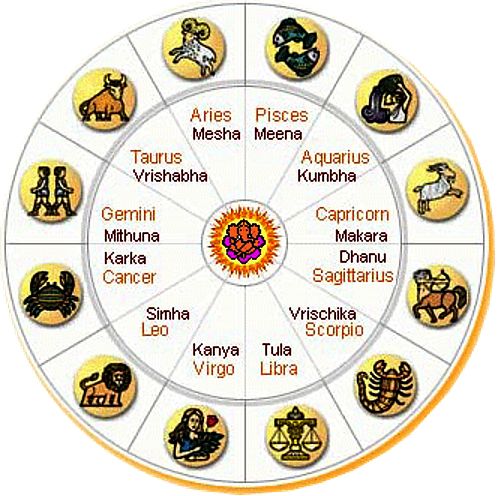
Image source: Saibaba jyothish
How the 12 Houses Shape Your Career and Relationships
To move beyond basic Sun sign astrology, you must understand the concept of the 12 Houses (Bhavas). The zodiac wheel is divided into twelve segments, each representing a specific pillar of human life. When a planet transits through one of these houses in your chart, it triggers events related to that specific life area.
While all twelve houses are important, five specific houses are heavily analyzed when generating career and relationship predictions:
- 1st House (Lagna): This represents your physical body, vitality, and how the world perceives you. A favorable transit here often brings a boost in confidence and personal magnetism.
- 2nd House (Dhana): The house of accumulated wealth, speech, and early family life. Predictions regarding sudden financial fluctuations or the success of a public speech are derived from this house.
- 7th House (Kalatra): The primary house of partnerships. This governs both romantic marriages and formal business contracts. When challenging planets like Saturn or Mars transit here, horoscopes often warn of interpersonal friction.
- 10th House (Karma): The highest point in the chart, governing career, public status, and professional achievements. Jupiter transiting this house frequently correlates with promotions or major career breakthroughs.
- 11th House (Labha): The house of sudden gains, large networks, and the fulfillment of long-term desires. It indicates how well your career efforts (10th house) will actually pay off financially.
When you read a horoscope that says, "Aries, expect a major career shift today," it is typically because a significant planet is activating the 10th house of the Aries chart.
What Should You Do When You Get a Bad Horoscope Prediction?
One of the most common issues readers face is "horoscope anxiety"—the feeling of dread that follows reading a negative prediction. Community discussions often highlight how fatalistic forecasts (e.g., "your finances will suffer this week") can trigger a nocebo effect, where the expectation of a bad outcome inadvertently causes the person to make poor decisions.
Reframing the "Bad" Day
Professional astrologers emphasize that there are no inherently "bad" planets, only challenging energies designed to prompt growth. Saturn, often feared as the planet of restriction and hardship, is actually the planet of mastery. A difficult Saturn prediction is not a punishment; it is an audit of your life, asking you to build stronger foundations.
In the Vedic tradition, you are not a passive victim of the stars. If a horoscope predicts a challenging transit, astrologers prescribe Upayas—practical remedies to mitigate negative planetary energy. These can include:
- Charity: Donating time or resources (e.g., helping the elderly to appease Saturn).
- Mantras: Reciting specific sound frequencies to calm the mind and focus intention.
- Actionable Adjustments: If a Mars transit predicts conflict, the remedy is to channel that aggressive energy into physical exercise or a demanding work project rather than arguing with a partner.
Ultimately, astrology maps the "weather," but you retain free will over how you dress for it. A prediction of rain simply means you should carry an umbrella, not that your day is ruined.
Finding Optimal Timing with Panchang and Choghadia
For those seeking highly actionable daily advice, general horoscope paragraphs are often insufficient. In these cases, advanced practitioners turn to micro-timing tools like the Panchang and Choghadia to find the exact hours of the day that are most conducive to success.
The Panchang is a traditional Hindu calendar system that evaluates the quality of time based on five distinct limbs:
- Tithi: The lunar day, which determines if the day is auspicious for starting new ventures or better suited for rest.
- Vara: The day of the week, each ruled by a specific planet (e.g., Tuesday is ruled by Mars, making it good for administrative action but poor for gentle negotiations).
- Nakshatra: The specific lunar mansion the Moon is passing through, which colors the emotional tone of the day.
- Yoga: The angular relationship between the Sun and Moon.
- Karana: Half of a Tithi, used for highly specific event timing.
Within the day, the Choghadia system divides the daylight and nighttime hours into specific windows of time. If you need to sign a contract, launch a website, or travel, you would look for an Amrit (nectar) or Shubh (auspicious) Choghadia window, while strictly avoiding the Rahu Kaal (a daily period considered highly unfavorable for new beginnings).
How to Move from General Predictions to Personal Accuracy
A daily horoscope for "Taurus" applies to roughly one-twelfth of the global population. While these general forecasts are useful for understanding broad atmospheric trends, they cannot provide 100% personalized accuracy. To achieve that, you must move beyond generic sun-sign blurbs.
Janam Kundli (The Birth Chart)
A personalized prediction requires a Janam Kundli, or birth chart. This requires your exact date, time, and location of birth. The exact time is crucial because it determines your Ascendant (Rising Sign), which changes every two hours. The Ascendant sets the layout of all 12 houses in your chart. Without an accurate birth time, an astrologer cannot accurately predict which specific areas of your life (career, health, marriage) will be impacted by current planetary movements.
Prashna Kundali (The Query Chart)
What if you do not know your birth time, but you have an urgent question? Advanced astrological texts, such as those studied by the Indian Council of Astrological Sciences (ICAS), outline the practice of Prashna (Horary astrology).
In this system, you do not need a birth chart. Instead, the astrologer casts a chart for the exact moment and location that you ask the question. The cosmic energy of that specific moment is believed to contain the answer to the query. Platforms like GaneshaSpeaks often utilize variations of these advanced techniques to provide more nuanced answers to user queries.
As we progress through 2026, the astrological landscape is defined by significant shifts in the outer planets. Saturn's continued movement demands structural maturity and financial discipline, particularly affecting mutable signs (Gemini, Virgo, Sagittarius, Pisces). Meanwhile, Jupiter's transits offer periods of rapid expansion and technological optimism. When reading your 2026 horoscope, pay special attention to where Jupiter falls in your chart, as this indicates your primary zone of growth and opportunity for the year.
Frequently Asked Questions
- Why do different websites give different horoscope predictions for the same sign?
- This usually occurs because Western astrology websites base their predictions on your Sun sign (using the Tropical zodiac), while Vedic astrology websites base their predictions on your Moon sign (using the Sidereal zodiac). The Sun reflects your external career and ego, while the Moon reflects your internal emotional state, leading to different types of advice.
- What is the difference between a daily horoscope and a birth chart?
- A daily horoscope is like a general weather report for everyone born under a specific sign. A birth chart (Janam Kundli) is a highly personalized map of the sky calculated using your exact date, time, and place of birth. A birth chart provides specific, individualized predictions that a general daily horoscope cannot match.
- Are free online astrology predictions actually reliable?
- Free online predictions are reliable for understanding broad, collective energy trends and general planetary transits. However, because they rely on generalized algorithms rather than a synthesis of your unique birth data, they should be used as mindful guidance rather than absolute, factual certainties about your future.
- What is the best time of day to read my horoscope?
- Many practitioners recommend reading your horoscope early in the morning. This allows you to mentally prepare for the day's potential energies and plan your actions accordingly. Alternatively, using a Panchang to check the daily Choghadia can help you find specific auspicious hours for important tasks.
- How can I mitigate a negative horoscope prediction?
- Astrology is a map of probabilities, not a fixed script. If you receive a challenging prediction, focus on practical preparation. In Vedic astrology, you can perform Upayas (remedies) such as donating to charity, practicing patience, or delaying major arguments, thereby using your free will to navigate the difficult planetary energy.
Final Thoughts on Horoscope Predictions
Navigating the world of astrology requires moving beyond casual reading and understanding the mechanics behind the forecasts. By applying these principles, you can use daily predictions as a powerful tool for strategic planning and self-awareness.
- Check your Moon sign for accurate insights into your daily emotional state and immediate reactions.
- Use your Sun sign to understand broad career trajectories, ego development, and long-term life goals.
- Consult the 10th and 11th houses in your personal chart for specific financial and professional planning.
- Apply practical remedies (Upayas) to proactively manage and mitigate challenging or "bad" planetary transits.
- Remember the role of free will; astrology maps the cosmic weather, but you are always the one driving the car.