How to Generate and Read Your Free Birth Chart Horoscope
Quick Answer: To generate an accurate free birth chart horoscope, you need your exact date, time, and city of birth. Top-rated platforms use the Swiss Ephemeris—a highly precise planetary database based on NASA data—to map the exact position of the sun, moon, and planets at the moment you were born. Once generated, interpreting your chart begins with identifying your "Big Three": your Sun (core identity), Moon (emotional world), and Rising sign (outward projection).
Astrology has evolved far beyond the generalized daily horoscopes found in the back of magazines. Today, anyone with an internet connection can access deeply personalized astrological data that was once exclusively available to professional astrologers. By inputting your birth data into a calculator, you receive a natal chart—a literal snapshot of the solar system from the exact geographical coordinates of your birth.
However, generating the chart is only the first step. The real challenge lies in interpreting the complex web of glyphs, aspect lines, and house cusps that appear on your screen. This comprehensive guide will walk you through the process of finding highly accurate free birth chart calculators, troubleshooting common data entry errors, and applying a professional workflow to read your chart effectively.
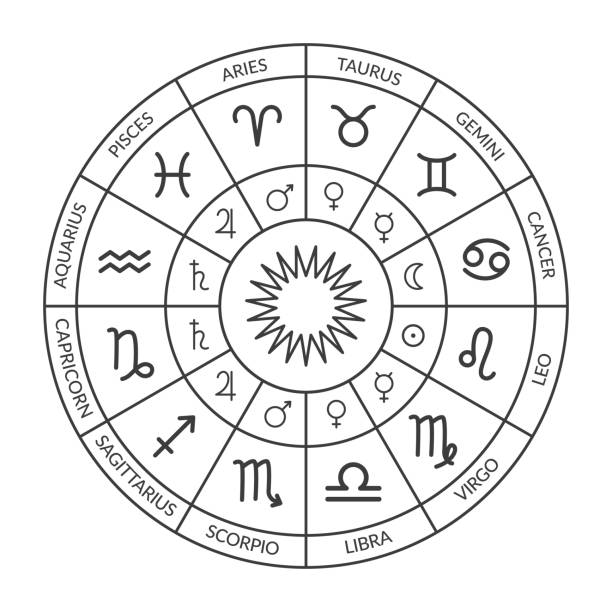
Image source: iStock
Where to Find Highly Accurate Free Birth Charts Online
Not all astrology websites calculate planetary positions with the same level of precision. The underlying software matters significantly. Leading platforms utilize the Swiss Ephemeris, a highly precise planetary database developed by Astrodienst, which is based on the DE431 ephemeris from NASA's Jet Propulsion Laboratory. When selecting a tool, you must consider your priorities regarding data accuracy, privacy, and user experience.
The Professional Standard: Astrodienst (Astro.com)
Within professional astrology circles, Astrodienst is widely regarded as a top-tier option. It is the platform most frequently recommended by practitioners due to its rigorous technical standards and extensive customization options. Users can adjust house systems, add dozens of specific asteroids, and calculate complex transits. While the interface may feel slightly dated to modern users, the mathematical precision it offers is highly celebrated in the astrological community.
The Privacy-First Option: Cafe Astrology
For users who are hesitant to create accounts or share email addresses, Cafe Astrology stands out as a strong contender. The site allows you to generate a comprehensive chart and a detailed written report entirely anonymously. Instead of forcing you to create an account, Cafe Astrology stores your chart data locally in your browser session using a temporary profile number, ensuring your sensitive birth data remains private.
The Social Experience: Co-Star
If your goal is to compare charts with friends, Co-Star offers a highly popular mobile and web experience. Co-Star emphasizes its use of NASA data to track real-time planetary movements. However, it is important to note that Co-Star uses a proprietary algorithm for interpretation and defaults to the Porphyry house system, which may yield different results compared to traditional platforms. It also requires an account and encourages social connectivity, which involves sharing your data within their network.
Comparison of Leading Free Chart Calculators
| Platform | Primary Data Source | Privacy Level | Best For |
|---|---|---|---|
| Astro.com | Swiss Ephemeris | Account optional (saves up to 100 charts) | Technical accuracy & advanced students |
| Cafe Astrology | Custom / Swiss Ephemeris | High (No account required) | Beginners wanting detailed text reports |
| Astro-Seek | Swiss Ephemeris | Account optional | Finding specific planetary transits |
| Co-Star | NASA Data / Custom Algorithm | Low (Social network integration) | Sharing and comparing with friends |
| Astro-Charts | Swiss Ephemeris | Account optional | Visualizing rare chart patterns |
What Information Do You Need to Create Your Horoscope?
To cast an accurate natal chart, you must provide three critical pieces of information. Missing or estimating any of these data points can drastically alter the resulting horoscope, potentially rendering the interpretation entirely inaccurate.
- Exact Date of Birth: Day, month, and year.
- Exact Local Time of Birth: Down to the minute (e.g., 4:17 PM).
- City of Birth: The specific geographical location.
The requirement for the exact city is tied to latitude and longitude. High-quality tools, such as those provided by Astrolabe, utilize global atlases containing over 250,000 locations to pinpoint your exact coordinates. This geographical data determines the exact angle of the horizon at the moment of your birth, which establishes your Ascendant (Rising sign).
The "0-Degree" Warning
In astrology, each zodiac sign occupies exactly 30 degrees of the sky. If a planet in your chart is positioned at 0 degrees or 29 degrees of a sign, it is considered "on the cusp." Because planets move continuously, a birth time that is off by even five minutes can push a 29-degree Moon into the next zodiac sign, completely changing your emotional profile. This is why rounding your birth time (e.g., guessing 2:00 PM instead of the actual 1:53 PM) is highly discouraged.
How to Create a Chart If You Do Not Know Your Birth Time
A common hurdle for many beginners is not knowing their exact time of birth. Hospital records can be lost, and family memories are notoriously unreliable. Fortunately, you can still generate a functional chart, though you must understand its limitations.
The Sunrise and Noon Chart Methods
When prompted for a time you do not have, astrologers generally recommend two workarounds:
- The Noon Chart: Enter 12:00 PM. Because noon is the exact middle of the day, the maximum margin of error for planetary movement is 12 hours in either direction. This keeps most planets in their correct signs.
- The Sunrise Chart: Enter the exact time of sunrise for your birth city on your birth date. This method aligns your Sun sign with your Ascendant, creating a "solar chart" that is useful for reading generalized planetary aspects.
What Stays Accurate and What You Lose
If you use an unknown time workaround, the positions of the "outer planets" (Jupiter, Saturn, Uranus, Neptune, Pluto) will remain entirely accurate, as they move very slowly. The "inner planets" (Mercury, Venus, Mars) and the Sun will also likely remain accurate, unless they were changing signs on that specific day.
However, the Moon moves rapidly—roughly 12 to 14 degrees per day. Without a birth time, your Moon sign may be incorrect. More importantly, you completely lose the Ascendant (Rising sign) and the 12 Houses. The Ascendant changes zodiac signs approximately every two hours, making it impossible to calculate without a precise time.
Image source: Astro All-Starz
Why Does Your Chart Look Different on Different Websites?
A frequent source of confusion occurs when a user generates a chart on Co-Star and is told they have a Gemini Rising, but then uses Cafe Astrology and is told they have a Taurus Rising. Assuming the birth data entered was identical, this discrepancy is almost always caused by the House System.
There is no single universally agreed-upon method for dividing the 360-degree sky into 12 houses. Different mathematical formulas yield different house boundaries (cusps). The two most prominent systems you will encounter are Placidus and Whole Sign.
Placidus System
Placidus is a time-based system and is the default on most modern astrology websites. It divides the houses based on the time it takes for a degree of the zodiac to travel from the horizon to the meridian.
- Pros: Highly popular in modern psychological astrology; accurately reflects the physical reality of the sky at extreme latitudes.
- Cons: Can result in "intercepted signs" (where a house is so large it swallows an entire zodiac sign) or tiny, squished houses, especially for births far from the equator.
Whole Sign System
Whole Sign is a space-based system and is the oldest method of house division. Whatever sign your Ascendant falls in becomes your entire 1st House (from 0 to 30 degrees), the next sign becomes the 2nd House, and so on.
- Pros: Exceptionally clean and easy for beginners to read. Eliminates the confusion of intercepted signs.
- Cons: The Midheaven (MC) can float into the 9th or 11th house, which contradicts some modern career astrology techniques.
If you are a beginner trying to learn the basics of your chart, switching your calculator's settings to the Whole Sign system is highly recommended. It provides a tidy, structured framework that makes identifying planetary placements much simpler.
A Step-by-Step Guide to Interpreting Your Natal Chart
When you generate a free chart, most websites provide a "wall of text" report that lists every single planetary placement in isolation. Reading these reports from top to bottom can be overwhelming and often results in contradictory information (e.g., one paragraph says you are highly outgoing, the next says you are deeply introverted).
To read a chart accurately, you must synthesize the information. Professional astrologers follow a specific sequence to build a cohesive profile. Based on the workflow popularized by astrologer Alice Bell, here is a structured approach to interpreting your chart:
Locate your Sun, Moon, and Ascendant (Rising). These three elements form the core architecture of your personality. The Sun is your ego and life purpose, the Moon is your emotional baseline, and the Rising is how you navigate the external world.
Find the Ascendant (AC), Descendant (DC), Midheaven (MC), and Imum Coeli (IC). These four points represent the compass directions of your life: Self (AC), Partnerships (DC), Career/Public Life (MC), and Home/Roots (IC). Planets sitting closely to these angles are highly active in your life.
Look at your Rising sign, then find the planet that rules that sign. For example, if you are a Leo Rising, the Sun is your chart ruler. The house where your chart ruler is located indicates a major focal point or life theme for you.
Scan the chart for clusters. If you have three or more planets in a single zodiac sign or a single house, this is called a Stellium. It represents a massive concentration of energy in that specific area of your life.
Look at the house placements of Mercury (communication), Venus (values and love), and Mars (drive and conflict). Their house placements show where you apply these energies, while their signs show how you apply them.
Understanding the Big Three and the 12 Houses
To execute the interpretation workflow above, you need a foundational understanding of the 12 astrological houses. The zodiac signs provide the "flavor" of the energy, the planets represent the "actors" performing the energy, and the houses represent the "stage" where the action takes place.
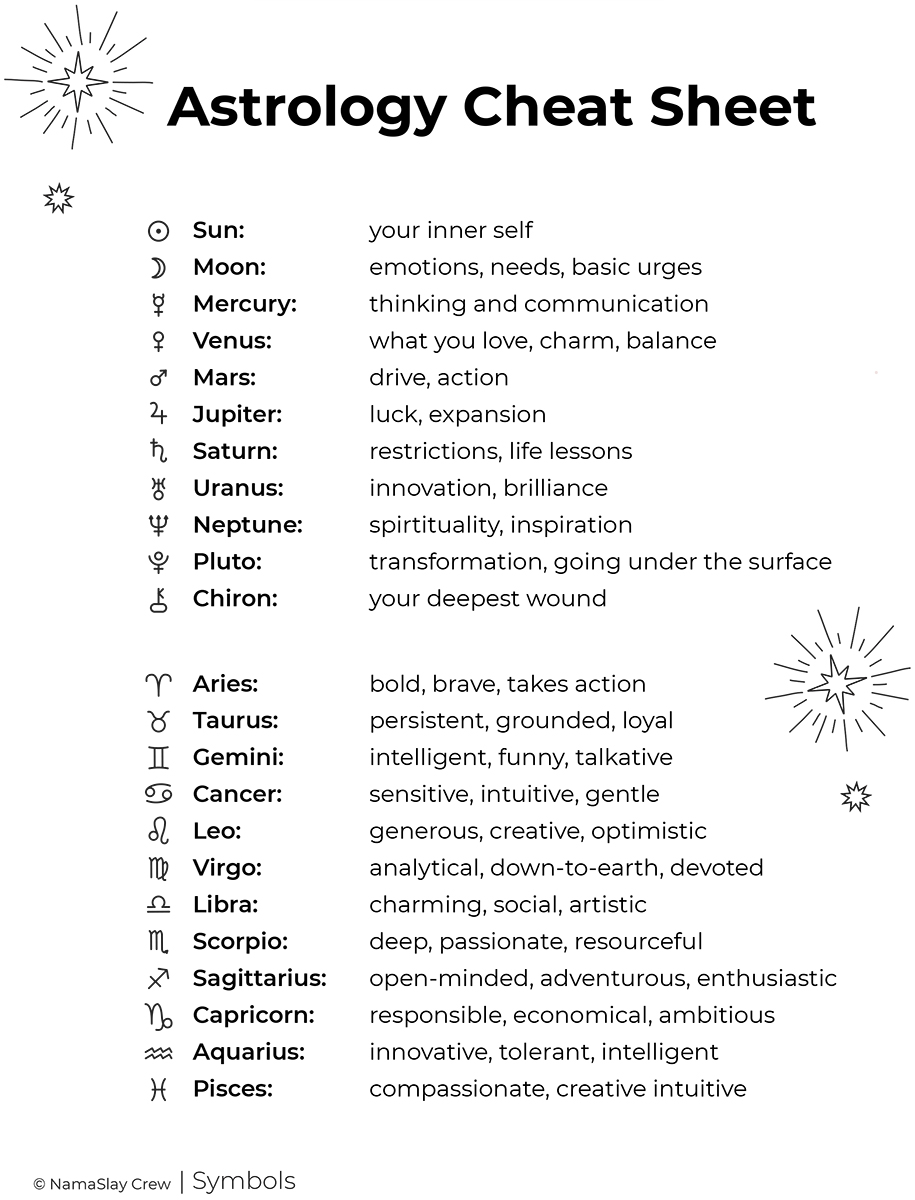
Image source: NamaSLAY Crew
The 12 Houses of Life: Quick Reference
- 1st House (Self): Physical appearance, first impressions, and your general approach to life.
- 2nd House (Value): Personal finances, material possessions, and self-worth.
- 3rd House (Communication): Siblings, short-distance travel, early education, and daily interactions.
- 4th House (Home): Family roots, ancestry, your physical home, and private life.
- 5th House (Pleasure): Romance, creativity, children, and hobbies.
- 6th House (Routine): Daily work, physical health, habits, and acts of service.
- 7th House (Partnership): Marriage, serious business partnerships, and open enemies.
- 8th House (Transformation): Shared resources, inheritance, intimacy, and psychological depth.
- 9th House (Expansion): Higher education, philosophy, long-distance travel, and belief systems.
- 10th House (Public Life): Career achievements, public reputation, and authority figures.
- 11th House (Community): Friendships, social networks, large groups, and long-term aspirations.
- 12th House (The Subconscious): Hidden matters, mental health, isolation, and spiritual closure.
Advanced Chart Patterns and What They Mean for You
Once you understand individual placements, you can begin looking at the geometry of the chart. The red and blue lines crisscrossing the center of your natal chart represent aspects—the mathematical angles between planets. When multiple aspects connect, they form distinct shapes known as chart patterns.
Platforms like Astro-Charts specialize in automatically detecting these configurations, which can range from common shapes to highly rare alignments. There are 17 distinct planetary configurations recognized in modern astrology. Some of the most notable include:
- The Grand Trine: Formed when three planets are 120 degrees apart, creating a perfect equilateral triangle. This pattern indicates a natural flow of harmonious energy and innate talent, though it can sometimes lead to complacency because the energy comes so easily.
- The Grand Cross: Formed by four planets at 90-degree angles to one another, creating a square. This is a high-tension pattern that brings significant challenges and obstacles, but also provides immense drive and the potential for major life achievements.
- The Yod (Finger of Fate): An isosceles triangle formed by two planets sextile (60 degrees) to each other, both pointing to a third planet at a 150-degree angle (quincunx). This pattern often points to a specific, unavoidable life mission or a deep psychological complex that requires resolution.
Protecting Your Privacy While Using Free Astrology Tools
It is crucial to remember that your birth data (exact date, time, and location) is highly sensitive information. In many jurisdictions, this data is used for identity verification, background checks, and security questions. When entering this information into free online calculators, you should be mindful of how the platform handles your data.
Different platforms operate on different privacy models. If privacy is a primary concern, avoid platforms that require you to link your social media accounts or upload your phone's contact list. Tools that allow for guest checkouts or utilize local browser storage (where the data lives on your device rather than a corporate server) offer the highest level of security for your personal information. Always review a site's privacy policy to ensure your birth data is not being sold to third-party data brokers for targeted advertising.
Frequently Asked Questions
No. A birth chart (natal chart) is a permanent snapshot of the sky at the exact moment you were born; it never changes. A daily horoscope is a forecast based on "transits"—where the planets are currently moving in the sky today and how those current positions interact with your permanent birth chart.
This is almost always due to the House System settings. One site may be using Placidus (the modern default), while the other may be using Whole Sign or Koch. Additionally, ensure you entered the exact same birth time and city on both sites, as a difference of even a few minutes can shift the Ascendant.
When a planet is marked with an "Rx" in your chart, it means it appeared to be moving backward in the sky from Earth's perspective when you were born. In natal astrology, retrograde planets indicate that the energy of that planet is internalized, delayed, or expressed in a highly unconventional manner.
Yes. Platforms like Astro.com and Astro-Seek allow you to generate your chart and save the image as a high-resolution PDF or PNG file. You can then print this file for personal journaling or study purposes.
Astrologers generally advise trusting the official birth certificate, as human memory—especially during the stress of labor—can be unreliable. If the discrepancy is significant, you can consult a professional astrologer who specializes in "chart rectification," a process of reverse-engineering your birth time based on major life events.
Key Takeaways
Generating and reading your natal chart is a process that requires precise data and a structured approach to interpretation. Keep these core principles in mind as you explore your astrological profile:
- Verify your exact birth time down to the minute; guessing can completely alter your Moon sign and Ascendant.
- Use trusted calculators like Astro.com or Astro-Seek that rely on the highly accurate Swiss Ephemeris database.
- Check your house system settings if your chart looks different across platforms; Whole Sign is highly recommended for beginners.
- Focus on the Big Three first (Sun, Moon, Rising) before getting lost in minor asteroid placements or complex aspects.
- Locate your chart ruler (the planet ruling your Rising sign) to identify the primary theme or driving force in your life.
- Protect your privacy by using platforms that do not require you to surrender your sensitive birth data to social networks.