How to Find Your Zodiac Sign and Understand Your Full Astrological Profile
To find your primary zodiac sign (your Sun sign), you simply need to match your birth date to the standard 12-sign astrological calendar. Here are the standard dates used in Western astrology:
- Aries: March 21 – April 19
- Taurus: April 20 – May 20
- Gemini: May 21 – June 20
- Cancer: June 21 – July 22
- Leo: July 23 – August 22
- Virgo: August 23 – September 22
- Libra: September 23 – October 22
- Scorpio: October 23 – November 21
- Sagittarius: November 22 – December 21
- Capricorn: December 22 – January 19
- Aquarius: January 20 – February 18
- Pisces: February 19 – March 20
Note: If you were born on the first or last day of these ranges (a "cusp"), you will need your exact birth time and city to confirm your sign, as the transition time changes slightly every year.
Your zodiac sign is much more than just a brief paragraph you read in the back of a magazine. According to professional astrologers, your astrological chart acts as a "cosmic fingerprint" that maps out the exact position of the stars and planets at the moment you entered the world. While most people only know their primary "Sun sign," truly knowing about your zodiac sign requires looking at a much larger picture.
If you have ever read a horoscope and thought, "This doesn't sound like me at all," you are not alone. The mainstream simplification of astrology often leaves out the crucial nuances that make your personality unique. To accurately understand your astrological profile, you need to look beyond just the day you were born and explore your exact time of birth, your geographical location, and the specific elements and modalities that govern your chart.
This comprehensive breakdown will teach you exactly how to find your true zodiac sign, how to calculate your "Big Three" (Sun, Moon, and Rising), and how to troubleshoot common issues like cusp birthdays and time zone discrepancies that cause different websites to give you conflicting results.
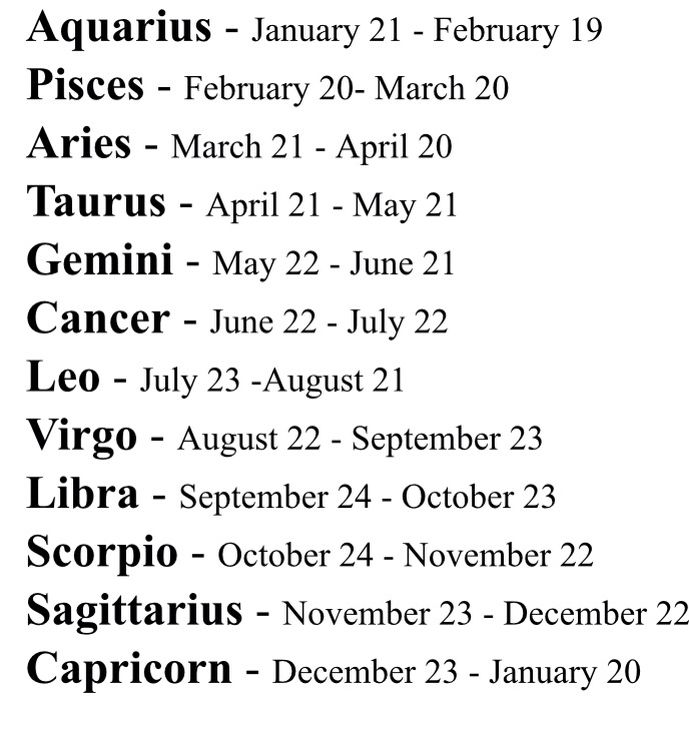
Image source: Pinterest
What Is My Zodiac Sign Based on My Birthday?
The most common way people identify their zodiac sign is by looking at their birthday. In Western astrology, this refers specifically to your Sun sign. Your Sun sign is determined by which of the 12 zodiac constellations the Sun was passing through from the perspective of Earth on the day you were born.
This system was established by the Babylonians around 500 BCE. They divided the sky into 12 equal segments of 30 degrees each, creating a 360-degree wheel that the Sun travels through over the course of a year. Because the Earth's orbit around the Sun is highly predictable, these dates remain relatively stable year after year.
The 12-Sign Astrological Calendar
Below is the standard reference table for the 12 zodiac signs, including their traditional symbols, standard date ranges, and their corresponding natural elements. You can use this table as your baseline to identify your primary sign.
| Zodiac Sign | Symbol | Standard Dates | Element |
|---|---|---|---|
| Aries | The Ram | March 21 – April 19 | Fire |
| Taurus | The Bull | April 20 – May 20 | Earth |
| Gemini | The Twins | May 21 – June 20 | Air |
| Cancer | The Crab | June 21 – July 22 | Water |
| Leo | The Lion | July 23 – August 22 | Fire |
| Virgo | The Maiden | August 23 – September 22 | Earth |
| Libra | The Scales | September 23 – October 22 | Air |
| Scorpio | The Scorpion | October 23 – November 21 | Water |
| Sagittarius | The Archer | November 22 – December 21 | Fire |
| Capricorn | The Sea-Goat | December 22 – January 19 | Earth |
| Aquarius | The Water Bearer | January 20 – February 18 | Air |
| Pisces | The Fish | February 19 – March 20 | Water |
Why Your Sign Might Change Depending on the Website
If you were born near the beginning or end of a sign's date range, you might have noticed a frustrating inconsistency online. For example, some mainstream publications list Aquarius as starting on January 20th, while others list it as starting on January 21st. Similarly, Scorpio is sometimes listed as ending on November 21st, and other times on November 22nd.
This happens because the Sun does not move on a human calendar. A human calendar year is exactly 365 days long (with an extra day added during leap years), but it actually takes the Earth roughly 365.24 days to complete its orbit around the Sun. Because of this slight mathematical discrepancy, the exact minute the Sun crosses the 30-degree threshold from one sign into the next changes slightly every single year.
Therefore, static date tables are only accurate for people born in the middle of a sign's season. If you were born on a transition day, relying on a simple date table will not give you an accurate answer. You will need to calculate your chart using your exact birth time, which we will cover in the troubleshooting section below.
How to Know Your Big Three Signs for a Complete Personality Map
When someone asks, "What is your sign?" they are asking for your Sun sign. However, professional astrologers rarely look at the Sun sign in isolation. To truly know about your zodiac sign, you must understand your "Big Three." These are the three most prominent placements in your natal chart, and together, they form the foundation of your astrological personality.
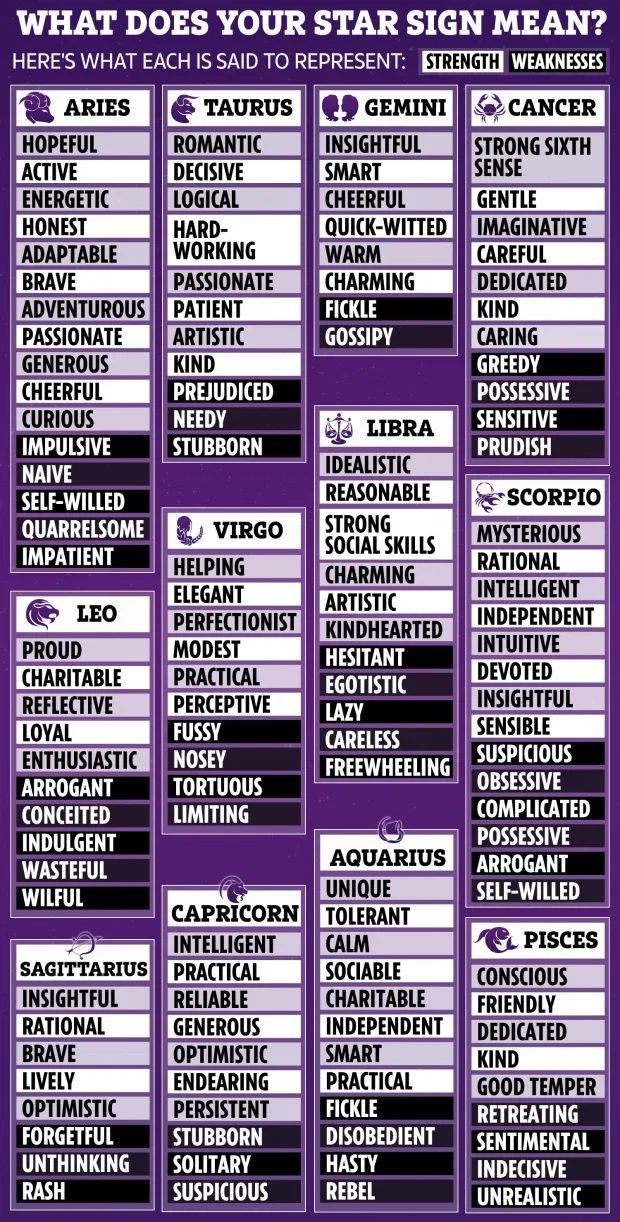
Image source: Pinterest
The Sun Sign Is Your Core Identity
As discussed, your Sun sign is determined by your birth date. In astrology, the Sun represents your ego, your core identity, and your fundamental life purpose. According to astrological experts, the Sun dictates your "main character" energy. It is the purest expression of who you are at your center, driving your basic motivations and your overarching goals in life. If your Sun is in Leo, your core drive is toward creative expression and recognition; if it is in Taurus, your core drive is toward stability and comfort.
The Moon Sign Is Your Emotional Inner World
While the Sun is your outward identity, your Moon sign represents your private, emotional inner world. The Moon moves very quickly through the sky, changing zodiac signs approximately every two and a half days. Because of this rapid movement, two people born in the same week can have the same Sun sign but completely different Moon signs.
Your Moon sign dictates how you process feelings, what makes you feel emotionally safe, and how you react instinctively to stress. This is often the missing puzzle piece for people who don't relate to their Sun sign. For example, if you have a bold, fiery Aries Sun, but a sensitive, watery Cancer Moon, you might find that you are much more introverted and emotionally driven than a typical Aries description would suggest.
The Rising Sign Is Your Social Mask and First Impression
Your Rising sign, also known as your Ascendant, is the zodiac sign that was physically rising on the eastern horizon at the exact moment and location of your birth. Because the Earth rotates on its axis, the rising sign changes roughly every two hours.
The Rising sign represents your "social mask." It is the energy you project into the world, your physical appearance, and the first impression you give to strangers. It also dictates the structure of your entire birth chart, determining which signs rule over the different areas (or "Houses") of your life. When you read a daily or weekly horoscope, professional astrologers highly recommend reading the horoscope for your Rising sign rather than your Sun sign, as it will provide a much more accurate timeline of events.
How to Find Your Zodiac Sign if You Were Born on a Cusp
One of the most common points of confusion in astrology is the concept of being born on a "cusp." A cusp refers to the 48-hour window when the Sun is transitioning out of one zodiac sign and moving into the next.
The Myth of Being "Two Signs at Once"
Pop culture astrology often claims that if you are born on a cusp, you possess the traits of both signs—for instance, claiming you are a "Leo-Virgo cusp" and therefore a blend of both. Astrologically and astronomically speaking, this is a myth. The Sun is a physical body in the sky; it cannot be in two places at once. At any given millisecond, the Sun is either mathematically in Leo or mathematically in Virgo. You only have one Sun sign.
If you feel like you relate to the neighboring sign, it is usually because Mercury or Venus (which travel very close to the Sun) were located in that neighboring sign when you were born, not because your Sun is split in half.
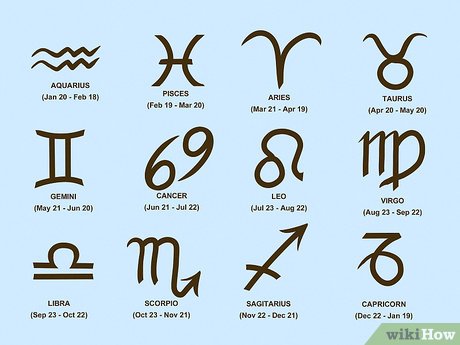
Image source: wikiHow Life
Why You Need Your Exact Birth Time and City
To find out which side of the cusp you fall on, you must use a birth chart calculator that asks for your exact birth time and birth city.
Imagine you were born on August 22, 1998. In that specific year, the Sun moved from Leo into Virgo at exactly 8:12 PM Eastern Time. If you were born at 8:11 PM, you are a Leo. If you were born at 8:13 PM, you are a Virgo. A simple date table cannot tell you this; only a mathematical calculation based on your birth certificate can.
Troubleshooting the Midnight Birth Dilemma
Time zones also play a massive role in determining your sign, especially if you were born near midnight. Let's say the Sun transitions from Gemini to Cancer at 11:00 PM Eastern Standard Time on June 20th.
- If you were born in New York at 11:30 PM on June 20th, the Sun had already moved into Cancer. You are a Cancer.
- If you were born in Los Angeles at the exact same simultaneous moment, the local clock on your birth certificate would say 8:30 PM on June 20th. You are still a Cancer, because the Sun is in the same position in the sky.
However, if you don't input your birth city into a calculator, the software won't know how to adjust for the time zone, leading to wildly inaccurate results. Always use your exact birth city to ensure the longitude and latitude are calculated correctly.
Why Two Signs in the Same Element Can Be Completely Different
Once you know your sign, you will likely read about its associated "Element." The 12 zodiac signs are divided into four elemental categories (Triplicities): Fire, Earth, Air, and Water. According to astrological theory, elements describe your basic temperament.
- Fire Signs (Aries, Leo, Sagittarius): Passionate, active, energetic, and impulsive.
- Earth Signs (Taurus, Virgo, Capricorn): Practical, grounded, reliable, and material-focused.
- Air Signs (Gemini, Libra, Aquarius): Intellectual, social, communicative, and analytical.
- Water Signs (Cancer, Scorpio, Pisces): Intuitive, emotional, sensitive, and deep.
But this raises a common question: If Aries and Sagittarius are both Fire signs, why do they act so differently? The answer lies in the Modalities.
The Missing Link: The Three Modalities (Quadruplicities)
While elements tell you what a sign's energy is, modalities tell you how that sign expresses its energy. The signs are divided into three modalities based on where they fall in the seasonal calendar:
- Cardinal Signs (Aries, Cancer, Libra, Capricorn): These signs begin the four seasons. They are the initiators, the leaders, and the self-starters of the zodiac. They are great at starting projects but may struggle to finish them.
- Fixed Signs (Taurus, Leo, Scorpio, Aquarius): These signs fall in the middle of the seasons. They are the sustainers. They are incredibly loyal, focused, and determined, but they can also be notoriously stubborn and resistant to change.
- Mutable Signs (Gemini, Virgo, Sagittarius, Pisces): These signs occur at the end of the seasons, as the weather is transitioning. They are the adapters. They are flexible, versatile, and open-minded, but they can sometimes be scattered or inconsistent.
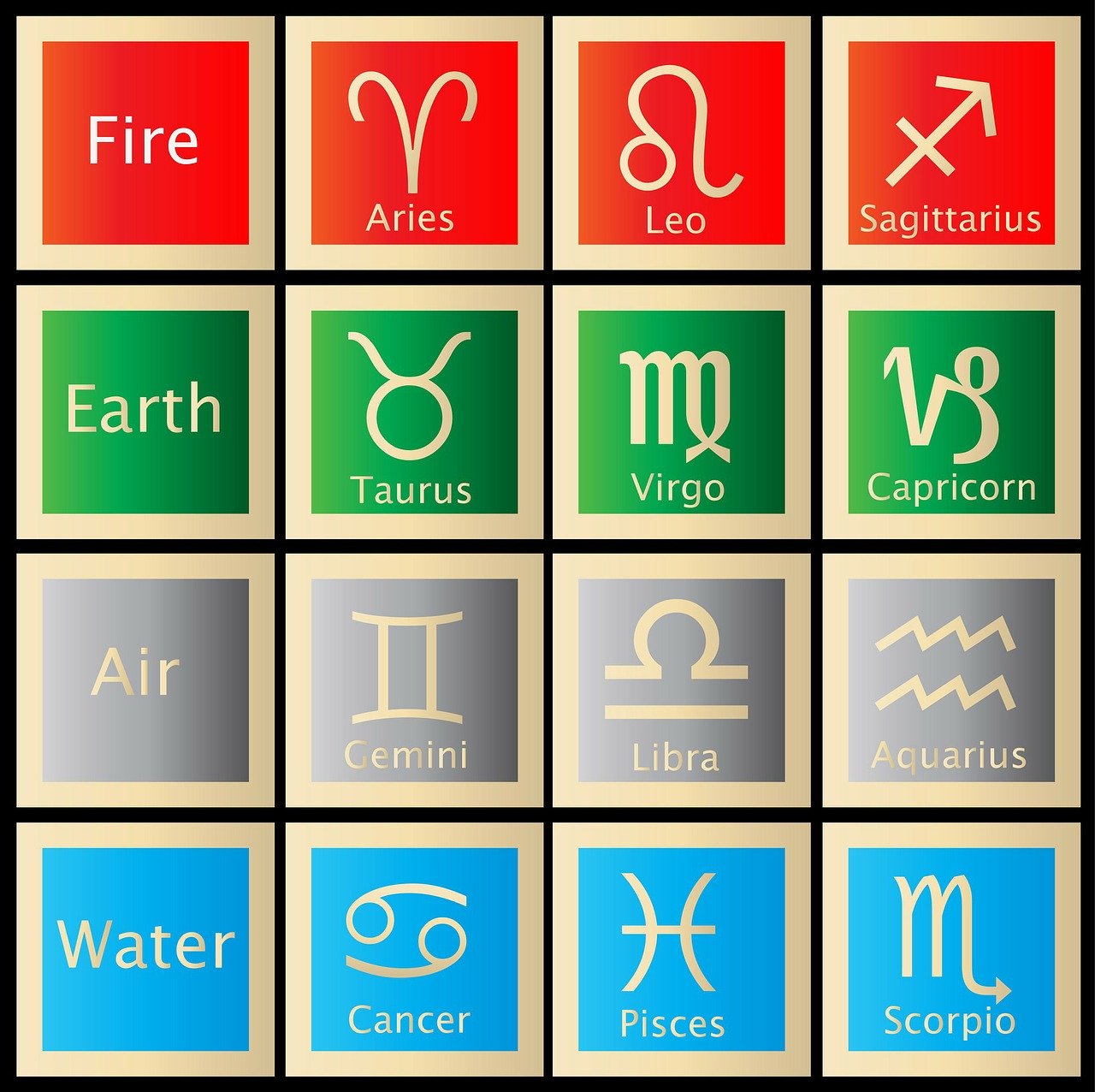
Image source: Under Lucky Stars
Comparison Table: The Modality Matrix
To truly understand how your sign operates, you must look at the intersection of its Element and its Modality. This matrix explains why every single sign is entirely unique.
| Element | Cardinal (The Initiators) | Fixed (The Sustainers) | Mutable (The Adapters) |
|---|---|---|---|
| Fire | Aries: Uses fire to lead and conquer. The spark that starts the flame. | Leo: Uses fire to warm and sustain. The steady, burning bonfire. | Sagittarius: Uses fire to explore and spread. The wild, spreading wildfire. |
| Earth | Capricorn: Uses earth to build structures and climb mountains. | Taurus: Uses earth to cultivate gardens and maintain stability. | Virgo: Uses earth to organize, refine, and perfect details. |
| Air | Libra: Uses air to initiate relationships and balance scales. | Aquarius: Uses air to sustain intellectual ideals and community structures. | Gemini: Uses air to gather information and adapt to new social settings. |
| Water | Cancer: Uses water to create emotional safety and nurture others. | Scorpio: Uses water to dive deep and sustain emotional intensity. | Pisces: Uses water to flow, adapt, and connect with the spiritual realm. |
Common Misconceptions About Knowing Your Sign
As you dive deeper into learning about your zodiac sign, you will inevitably encounter a few widespread rumors and misconceptions that confuse beginners. Let's clear up the two most common issues.
Every few years, a viral article claims that NASA has "discovered a 13th zodiac sign" called Ophiuchus, and that everyone's zodiac sign has shifted. This is false in the context of Western astrology.
According to historical and astronomical records, Ophiuchus is a real constellation. Because the Earth wobbles on its axis over thousands of years (a phenomenon called the Precession of the Equinoxes), the physical constellations have shifted in the sky. However, Western astrology is a seasonal system, not a literal map of the stars. It is based on the relationship between the Earth and the Sun, divided into 12 neat mathematical slices starting at the Spring Equinox. The physical shifting of the stars does not change your Western zodiac sign.
Can You Find Your Zodiac Sign by Name?
Many people search online trying to find their zodiac sign based on their first or last name. If you are trying to do this, you are looking in the wrong place. Western astrology is strictly a date, time, and location-based mathematical system. Your name has absolutely zero bearing on your astrological birth chart.
If you are interested in name-based analysis, you should look into Numerology, which assigns numerical values to the letters in your name to determine your "Life Path Number" or "Destiny Number." Additionally, certain branches of traditional Vedic astrology use the syllables of a child's birth name to align with specific lunar mansions (Nakshatras), but this is a highly specialized practice that does not apply to standard Western Sun signs.
Western vs. Vedic Astrology — Which One Is Right?
If you use an online calculator and suddenly find that your sign has changed—for example, you have always been a Gemini, but the calculator says you are a Taurus—you have likely stumbled into a Vedic astrology calculator by mistake. It is crucial to understand the difference between the two major global systems.
Tropical (Western) Astrology
Western astrology uses the Tropical Zodiac. As mentioned earlier, this system is tied to the seasons. The astrological year always begins at the exact moment of the Vernal (Spring) Equinox, which is designated as 0 degrees Aries. This system focuses heavily on psychological archetypes, personality traits, and personal growth.
Sidereal (Vedic) Astrology
Vedic astrology (Jyotish), which originated in ancient India, uses the Sidereal Zodiac. This system tracks the actual, current observable positions of the constellations in the sky. Because of the Earth's wobble (precession), the Sidereal zodiac is currently about 24 degrees behind the Tropical zodiac. This means that if you calculate your chart using Vedic astrology, your Sun sign will almost always shift one sign backward.
Decision Framework: Which System Should You Use?
Neither system is "wrong"; they simply measure different things. If you are interested in understanding your psychological profile, your ego, and Western cultural archetypes, stick to Tropical (Western) astrology. If you are interested in Eastern philosophy, karmic life paths, and highly specific predictive timelines, you may want to explore Sidereal (Vedic) astrology.
How to Use Your Sign for Compatibility and Relationships
Once people know their zodiac sign, their immediate next question is usually, "Who am I compatible with?" Mainstream astrology often relies on simple "sign-to-sign" matching (e.g., "Aries and Leo are a perfect match"). While this can be fun, it is highly inaccurate for real-world relationship building.
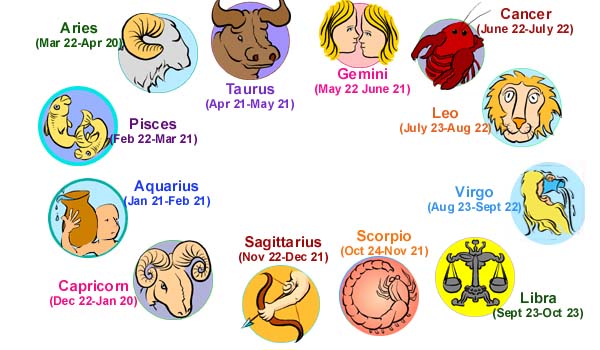
Image source: camdenliving.com
Beyond "Sign-to-Sign" Matching: Introducing Synastry
According to compatibility experts, the formal branch of astrology used to compare two people is called Synastry. Synastry does not just look at your Sun signs; it overlays your entire birth chart onto your partner's birth chart to see how the planets interact.
For romantic compatibility, astrologers look heavily at Venus (the planet of love, aesthetics, and affection) and Mars (the planet of passion, drive, and physical intimacy). You might have incompatible Sun signs, but if your Venus and Mars placements are in perfect harmony, you can still have a deeply fulfilling relationship.
The Element Harmony Rule
If you don't have the time to calculate a full Synastry chart, the most reliable shortcut for basic compatibility is the "Element Harmony Rule." Generally speaking, signs within the same element group get along effortlessly because they speak the same energetic language. Beyond that, the elements pair off naturally:
- Fire and Air (The Fueling Pair): Fire needs Air to burn, and Air is warmed by Fire. These signs (Aries, Leo, Sagittarius + Gemini, Libra, Aquarius) tend to have highly dynamic, exciting, and intellectually stimulating relationships.
- Earth and Water (The Nurturing Pair): Earth needs Water to grow life, and Water needs Earth to give it boundaries and structure. These signs (Taurus, Virgo, Capricorn + Cancer, Scorpio, Pisces) tend to have deeply grounded, emotionally supportive, and stable relationships.
Frequently Asked Questions
Final Thoughts on Knowing Your Zodiac Sign
Knowing your zodiac sign is the first step in a much larger journey of self-discovery. By moving past the basic magazine horoscopes and understanding the mechanics of your full birth chart, you gain a powerful tool for self-reflection and interpersonal understanding. Here is a summary of the most important steps to take:
- Identify your baseline: Locate your birth date on the standard 12-sign calendar to find your core Sun sign.
- Check for cusp overlaps: If your birthday falls within 48 hours of a sign transition, do not rely on static date tables.
- Gather your birth data: Locate your exact birth time and birth city on your official birth certificate to ensure time zone accuracy.
- Calculate your Big Three: Use an online natal chart calculator to discover your Sun (core identity), Moon (emotional world), and Rising (social mask) signs.
- Analyze your operating style: Look up your sign's Element (Fire, Earth, Air, Water) and Modality (Cardinal, Fixed, Mutable) to understand why you act the way you do.
- Ignore the 13th sign myth: Remember that Western astrology is a seasonal mathematical system, meaning the shifting of the Ophiuchus constellation does not change your sign.