7 Best Horoscope Apps for Accurate Daily Readings and Birth Chart Analysis
If you are searching for the most accurate app horoscope, your choice depends entirely on your experience level and what you value most in a reading. The modern astrology market is dominated by three distinct approaches:
- For the Aesthetic & Social User: Co-Star uses AI and NASA data to deliver hyper-personalized, often blunt daily transits that you can easily compare with friends.
- For the Spiritual & Healing User: CHANI relies entirely on human astrologers to write therapeutic, mindfulness-based readings using the traditional Whole Sign house system.
- For the Serious Student: TimePassages offers professional-grade chart calculations, including synastry bi-wheels and solar arc directions, making it the go-to for advanced practitioners.
Before downloading any app, ensure you know your exact birth time and location, as this data is required to calculate your "Big Three" (Sun, Moon, and Rising signs)—the foundation of any accurate astrological reading.
The modern App Store is completely oversaturated with astrology applications. For anyone seeking a reliable app horoscope, the search often leads to a cycle of frustration. You download a beautifully designed app, enter your highly personal birth data, and receive a vague, generalized reading. Worse, when you try to look deeper into your daily transits or check your compatibility with a partner, you are immediately hit with a $29.99 monthly paywall.
In 2026, the standard for what constitutes a "good" astrology app has shifted dramatically. Users are no longer satisfied with generic sun-sign horoscopes found in the back of a magazine. Today’s users expect comprehensive birth chart analysis that includes their Sun (core identity), Moon (emotional landscape), and Rising sign (outward projection). They want real-time planetary transits, and they want to know exactly how those movements affect their specific natal placements.
However, this demand for hyper-personalization has created a divide in the industry. On one side, tech-heavy apps use artificial intelligence to synthesize massive amounts of astronomical data into bite-sized notifications. On the other side, traditional astrologers are pushing back, arguing that human intuition and synthesis cannot be replicated by an algorithm. In this comprehensive breakdown, we will analyze the top horoscope apps on the market, dissecting their paywalls, their data privacy policies, and the technology powering their daily readings.
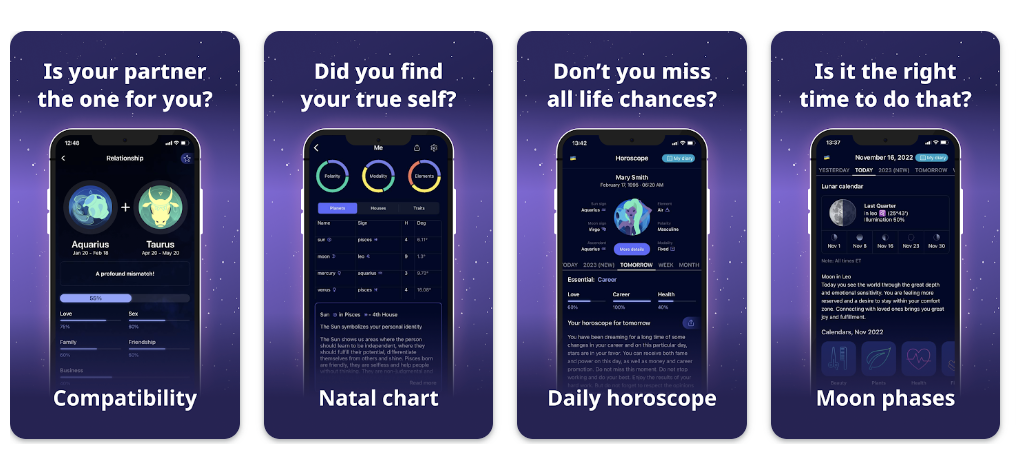
Image source: Medium
Which Horoscope App Is Right for Your Experience Level?
Choosing the right app horoscope requires understanding your own astrological literacy. If you do not know the difference between a trine and a square, downloading a professional-grade app will only leave you confused and overwhelmed. Conversely, if you are actively studying planetary returns and secondary progressions, a beginner app will feel entirely useless.
To help you navigate the crowded marketplace, we have categorized the top applications into a decision matrix based on user experience level, the underlying technology, and their approach to user privacy.
| App Name | Best For... | Primary House System | Content Generation | Privacy Approach |
|---|---|---|---|---|
| The DailyHoroscope | Absolute Beginners | Solar / None (Sun Sign focus) | Human-written templates | High (No location required) |
| Co-Star | Social Sharing & Aesthetics | Placidus | AI + NASA Data | Low (Collects contacts/identifiers) |
| The Pattern | Psychological Insights | Proprietary (Hidden) | Algorithmic Synthesis | Medium (Requires exact birth data) |
| CHANI | Mindfulness & Healing | Whole Sign | 100% Human Astrologers | High (Transparent data usage) |
| TimePassages | Intermediate Students | Placidus (Customizable) | Algorithmic text blocks | Medium (Standard account data) |
| Time Nomad | Electional Astrology | Customizable (All systems) | Data-only (No interpretations) | High (Local device storage) |
| Astro-Seek (Web) | Free Professional Tools | Customizable (All systems) | Data + Traditional texts | High (No account required) |
For absolute beginners, The DailyHoroscope remains a staple. With over 10 million users, it strips away the complex geometry of birth charts and focuses purely on accessible, daily sun-sign readings. It also includes niche features like Chinese and Druid horoscopes, making it a fun, low-stakes entry point into astrology.
Intermediate users generally gravitate toward apps that offer a mix of psychological insight and social connectivity. Apps like Co-Star and The Pattern excel here. They translate complex astrological transits into modern, relatable language. Instead of telling you that "Saturn is squaring your natal Venus," they might tell you that "your relationship boundaries are being tested today."
Advanced users and professional astrologers require raw data over pre-written interpretations. Apps like Time Nomad and TimePassages provide exact degrees, minutes, and seconds of planetary positions. They allow users to customize their house systems, view multiple charts simultaneously, and track long-term planetary cycles without the fluff of daily push notifications.
Why the Human vs. AI Debate Matters for Your Daily Reading
One of the most significant, yet rarely discussed, aspects of choosing an app horoscope is understanding exactly *who* or *what* is writing your daily reading. The astrology community is currently divided over the use of Artificial Intelligence. While AI can instantly calculate millions of planetary combinations, critics argue it lacks the nuance, empathy, and synthesis required for a genuinely helpful astrological reading.
CHANI and the Case for Human-Written Astrology
The CHANI app, created by renowned astrologer Chani Nicholas, stands in stark contrast to the tech-bro culture of Silicon Valley astrology apps. The CHANI team explicitly rejects the use of AI for generating horoscopes. Every daily reading, weekly podcast, and guided meditation is written, recorded, and curated by human astrologers.
This human-first approach fundamentally changes the tone of the app. CHANI is deeply rooted in traditional astrology, utilizing the Whole Sign house system, but its delivery is highly therapeutic. The app focuses heavily on mindfulness, manifestation, and emotional healing. When a difficult transit occurs—such as a Mars retrograde or a challenging eclipse—the human writers contextualize the event not as a looming disaster, but as an opportunity for growth and reflection. For users who find astrology anxiety-inducing, this human touch provides a necessary grounding effect.
Co-Star and the Use of Real-Time NASA Data
On the opposite end of the spectrum is Co-Star. According to their official documentation, Co-Star uses a proprietary AI engine that integrates directly with real-time NASA ephemeris data to track planetary movements. The AI then synthesizes this astronomical data with snippets of text written by human poets and astrologers to generate hyper-personalized daily updates.
Because Co-Star relies on an algorithm to piece together these text snippets, the resulting tone is famously blunt, edgy, and sometimes chaotic. Users frequently share Co-Star's push notifications on social media because of their "biting truth" or seemingly gloomy outlooks (e.g., "Don't let your ego ruin your day" or "Your friends are tired of your complaining"). While this AI-driven approach allows for an unprecedented level of personalization—calculating transits down to the exact minute—it lacks the holistic synthesis a human astrologer provides. The AI might accurately identify that you have three difficult transits happening simultaneously, but it cannot always weave them together into a cohesive, supportive narrative.
How to Navigate the Privacy Paradox in Astrology Apps
To generate an accurate birth chart, an astrology app requires three highly sensitive pieces of information: your exact date of birth, your exact time of birth, and the specific city where you were born. This data is non-negotiable for calculating your Rising sign and house placements. However, the collection of this data creates a significant privacy paradox.
Users are freely handing over the exact information traditionally used for identity verification (birth date and location) to third-party developers. Furthermore, many modern apps request permissions that go far beyond what is necessary to calculate a horoscope.
Co-Star has faced significant scrutiny from the astrology and tech communities regarding its data collection practices. To utilize its popular social compatibility features, the app requests access to your phone's contact list. According to its App Store privacy label, Co-Star collects data linked to your identity, including Contacts, Identifiers, and Usage Data. Users should be aware that they are trading personal network data for the convenience of seeing their friends' charts.
In contrast, older, more traditional apps take a hardline stance against unnecessary data collection. The developers of The DailyHoroscope explicitly state in their app description that they do not require location or address book permissions, arguing that real-time GPS tracking is entirely unnecessary for delivering a daily horoscope. They prioritize user anonymity over social networking features.
Before you download a new app horoscope and hit "Allow" on every permission prompt, run through this quick privacy checklist:
- Does it need my GPS location? No. An app only needs the *city* of your birth to calculate your natal chart. It does not need to track your current physical location unless you are actively using a real-time relocation astrology feature.
- Does it need my contacts? No. Unless you specifically want to use in-app social networking features to compare charts with friends, deny this permission.
- Can I delete my data? Check the app's settings menu before committing. A trustworthy app will have a clear, one-tap option to permanently delete your account and wipe your birth data from their servers.

Image source: Google Play
Best Apps for Serious Students and Professional Astrologers
Once you move past the desire for daily push notifications and begin actively studying astrological mechanics, the mainstream apps quickly lose their appeal. Serious students need tools that allow them to cast multiple charts, track secondary progressions, and analyze the exact geometric angles (aspects) between planets. For this demographic, two applications stand out above the rest.
TimePassages for Professional Grade Chart Calculations
TimePassages, developed by Astrograph, has long been considered the gold standard for mobile astrology calculations. It is designed by astrologers, for astrologers. The app provides incredibly detailed visual representations of the sky, including Synastry Bi-Wheels (overlaying two people's charts to analyze relationship dynamics) and Composite Charts (creating a single chart that represents the relationship itself).
Furthermore, TimePassages offers advanced forecasting tools like Solar Arc Directions and Secondary Progressions—techniques that track how your natal chart evolves over decades. It also includes a comprehensive "Glossary of Symbols," making it an excellent educational tool for intermediate students trying to memorize planetary glyphs and aspect meanings.
However, it is important to note the recent community backlash regarding their pricing model. Historically, TimePassages offered a one-time "Lifetime Pro" upgrade for around $40. Recently, they transitioned to a subscription-based model, leading to significant subscription fatigue among long-time users on platforms like Reddit. While the calculations remain top-tier, the ongoing cost is a point of contention for many practitioners.
Time Nomad for Electional Astrology and Sky Snapshots
For users who want pure, unadulterated astrological data without pre-written interpretations, Time Nomad is the ultimate tool. Highly recommended in professional astrology forums, Time Nomad is unique because it functions more as an astronomical calculator than a traditional horoscope app.
Its standout feature is its utility for Electional Astrology—the practice of choosing the most auspicious time to begin an event (like launching a business or getting married). Users can manipulate time minute-by-minute to watch how the planetary alignments shift, allowing them to pinpoint the exact moment a favorable aspect occurs.
Additionally, Time Nomad offers highly customizable Home Screen widgets for both iOS and Android. These widgets provide a real-time "Sky Snapshot," allowing you to see the current planetary transits, retrograde statuses, and moon phases at a glance without ever opening the app. For the practicing astrologer, this ambient awareness of the cosmos is invaluable.
What Can You Actually Get for Free in 2026?
The most common complaint regarding any app horoscope is the "bait-and-switch" monetization strategy. An app will advertise itself as free, allow you to input your birth data, show you a beautiful graphic of your chart, and then immediately lock the actual interpretations behind a paywall. In 2026, finding a genuinely free astrology app requires navigating a minefield of $24.99/month subscriptions.
To save you time, we have mapped out exactly what you can expect to get for $0 across the major platforms.
| Feature | Co-Star | CHANI | TimePassages | Astro-Seek (Web) |
|---|---|---|---|---|
| Natal Chart Generation | Free | Free | Free | Free |
| Basic Daily Transit | Free | Free | Paid ($0.99 or Sub) | Free |
| In-Depth Weekly Readings | Paid | Paid | Paid | Free |
| Relationship Compatibility | Free (Basic) | N/A | Paid | Free (Advanced) |
| Guided Meditations | N/A | Paid | N/A | N/A |
As the table illustrates, most apps will give you your basic birth chart for free. The monetization occurs when you want to look at the future (transits) or look at other people (compatibility). If you are on a strict budget, you must be prepared to accept limited daily insights or look outside the App Store entirely.
Why Astro-Seek Is the Best Free Alternative to Any App
If you ask any professional astrologer on Reddit or niche astrology forums for the best free tool, they will universally point you away from the App Store and toward a website: Astro-Seek.com. While it does not have a native mobile app, its mobile-optimized website is the most powerful free astrological tool available on the internet.
Astro-Seek offers everything that premium apps charge $30 a month for, completely free of charge. You can calculate highly complex charts, including Solar Returns, Lunar Returns, Progressions, and intricate Synastry grids. The site uses highly accurate Swiss Ephemeris data, ensuring professional-level precision.
Furthermore, Astro-Seek does not hide its interpretations behind paywalls. When you generate a chart, the site provides extensive, traditional text interpretations for every planetary placement and aspect. While the user interface may look slightly dated compared to the sleek, minimalist design of modern apps, the sheer volume of free, accurate data makes Astro-Seek the undisputed champion for budget-conscious astrology students.
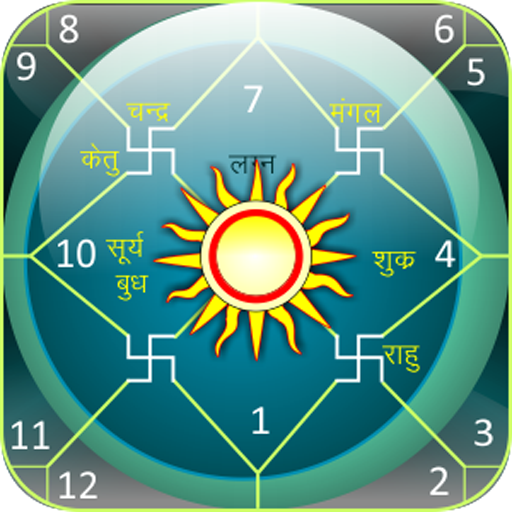
Image source: Google Play
Understanding the House System Choice in Your App
One of the most confusing experiences for a new astrology student is downloading two different apps, entering the exact same birth data, and receiving two completely different birth charts. You might be a Scorpio Venus in one app, but a Sagittarius Venus in another. Your Rising sign might shift entirely. This is not a glitch; it is a result of the "House System" the app uses.
The astrological wheel is divided into 12 houses, each representing a different area of life (e.g., the 4th house rules home and family, the 10th house rules career). However, astrologers have debated for centuries on exactly how to divide the sky into these 12 slices. This debate has bled into modern app development.
The Placidus System: This is the default system for most modern, western astrology apps, including Co-Star and TimePassages. Placidus is a quadrant-based system that divides the houses based on the time it takes for a degree of the zodiac to cross the horizon. Because it is time-based, it is highly sensitive to the latitude of your birth. If you were born very far north or south of the equator, Placidus can create "intercepted" signs, where some houses are massive and others are tiny, swallowing up entire zodiac signs.
The Whole Sign System: This is the oldest house system, used in traditional Hellenistic astrology, and is the default system for the CHANI app. In Whole Sign, the math is simple: whatever sign your Ascendant (Rising) is in becomes your entire 1st house. The next sign becomes your 2nd house, and so on. Every house is exactly 30 degrees. There are no interceptions.
If you find that your app horoscope feels inaccurate, check the settings to see which house system is being used. Many users who feel disconnected from their Placidus chart find profound clarity when they switch to a Whole Sign chart, and vice versa. Advanced apps like Time Nomad and Astro-Seek allow you to toggle between dozens of different house systems, giving you the freedom to explore which mathematical framework best reflects your lived experience.
Frequently Asked Questions
Final Thoughts on Finding Your Perfect App Horoscope
Navigating the astrology app market requires looking past beautiful interfaces and clever marketing to understand the mechanics underneath. Whether you are looking for a quick daily affirmation or a tool to calculate complex planetary geometry, the right app can significantly enhance your understanding of yourself and the cycles of your life.
Before you commit to a monthly subscription or hand over your exact birth data, keep these critical points in mind to ensure you choose the best tool for your astrological journey:
- Match the app to your knowledge level: Beginners should stick to The DailyHoroscope, while serious students will find the most value in TimePassages or Time Nomad.
- Decide between Human and AI authors: Choose CHANI if you want therapeutic, human-written guidance, or Co-Star if you prefer blunt, AI-synthesized data points.
- Protect your privacy: Never grant an astrology app access to your contact list or real-time GPS location; they only need your birth city to calculate your chart.
- Beware the subscription bait-and-switch: Most apps offer free birth charts but paywall daily transits. Use Astro-Seek (web) if you want professional-grade tools for free.
- Check your House System: If your chart feels wrong, check if the app uses Placidus or Whole Sign, as this mathematical difference can completely change your reading.